2026.05.15
 Industry News
Content
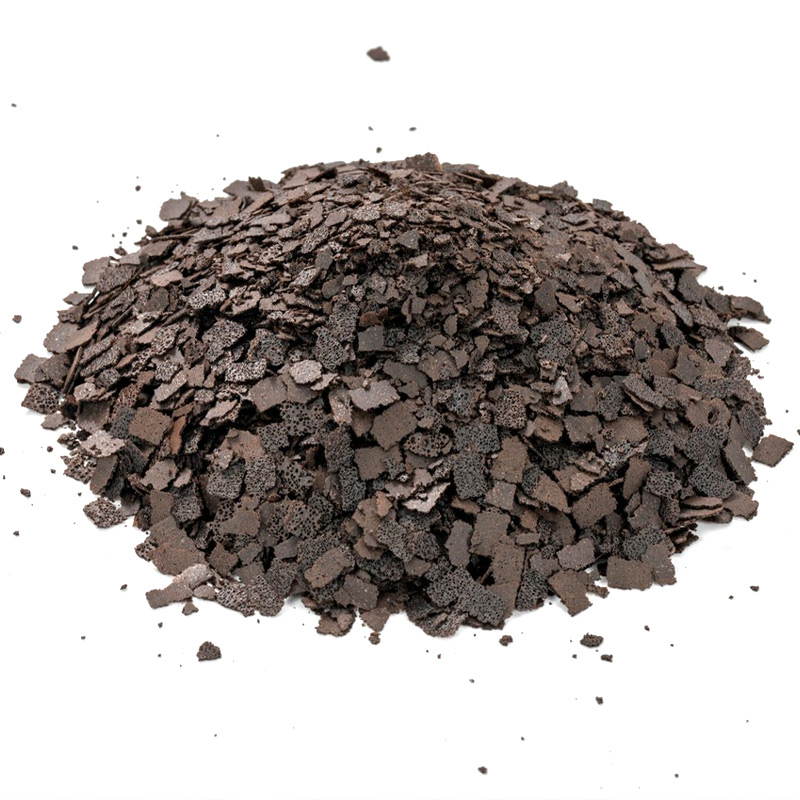
Cocoa Feuilletine has evolved from a niche French pastry ingredient into an irreplaceable texture enhancer in the global dessert industry. Its core advantages include: maintaining a crispy mouthfeel for 4 to 8 weeks in fat-rich environments, with water activity below 0.30 and moisture content controlled under 3%. These technical parameters make it ideal for chocolate inclusions, mousse cake bases, and ice cream mix-ins, directly solving the industry-wide pain point of rapid softening that traditional crispy inclusions suffer from in lipid-based matrices.
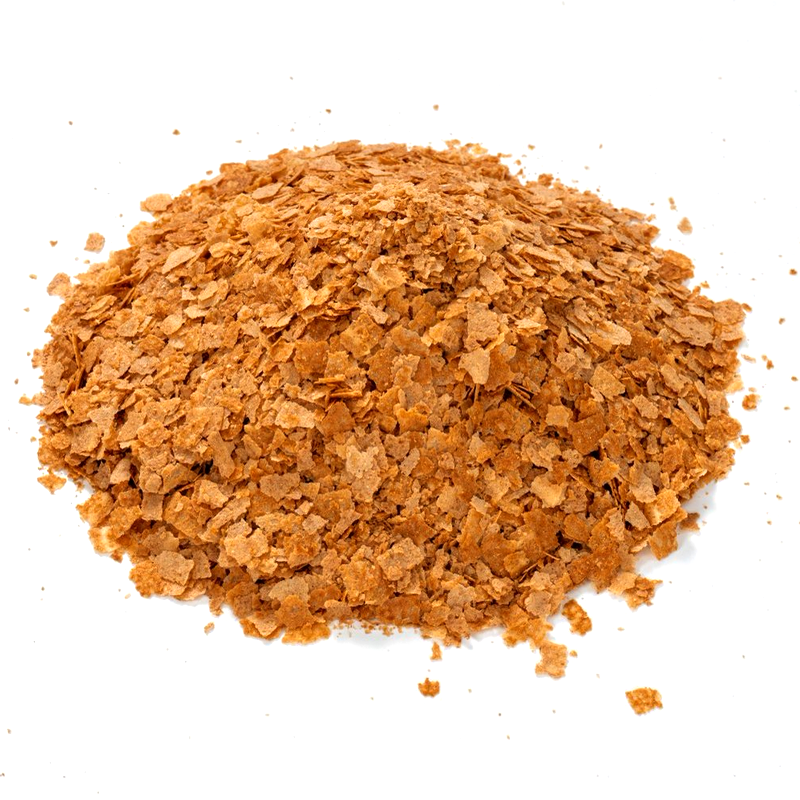
Cocoa Feuilletine is a thin, flaky confectionery ingredient made from caramelized crêpe dough infused with cocoa powder (typically 5% to 12% by formulation). Compared to plain feuilletine, the cocoa variant carries a mild bittersweet note that pairs more naturally with milk and dark chocolate applications.
| Parameter | Recommended Range | Impact on Finished Product |
|---|---|---|
| Water Activity (Aw) | ≤ 0.30 | Crunch retention, mold prevention |
| Moisture Content | ≤ 3% | Shelf life, texture stability |
| Flake Size (D50) | 4–10 mm | Mouthfeel, visual appearance |
| Fat Content | 15–25% | Flavor richness, fat migration rate |
| Cocoa Solids | 5–12% | Flavor intensity, color depth |
| Shelf Life (sealed) | 12–18 months | Inventory flexibility, cost efficiency |
Cocoa Feuilletine production follows a rigorous baking workflow where every step directly impacts final texture performance:
When embedded in chocolate ganache or praline, cocoa butter from the surrounding fat phase gradually migrates into the flake matrix, causing softening. High-quality feuilletine uses optimized baking parameters or barrier fat technology to extend crunch retention to 4 to 8 weeks under standard storage conditions (18°C, 55% RH).
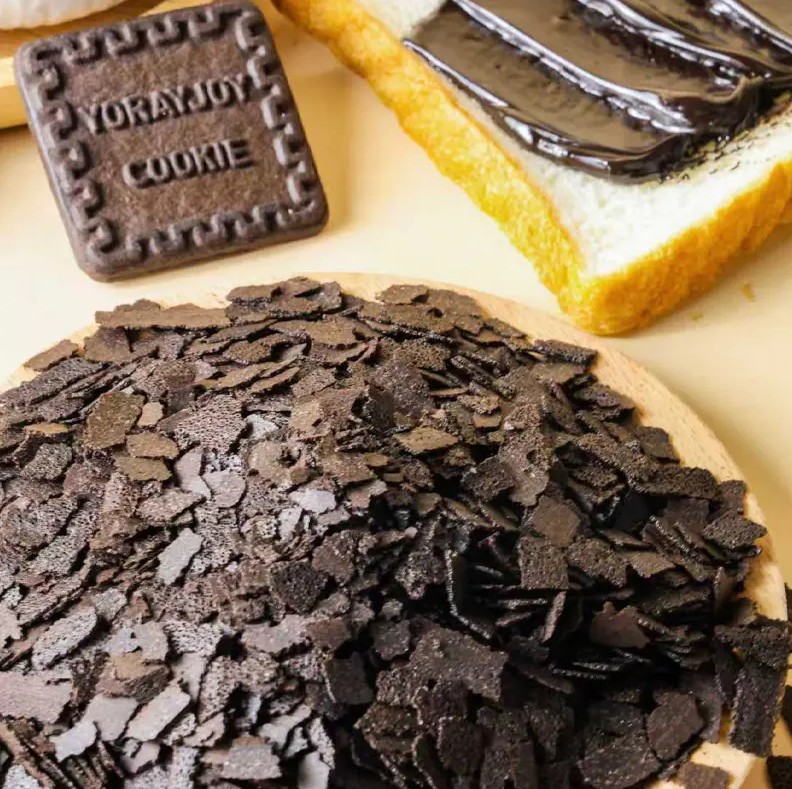
The classic application is the praline croustillant—a layer of hazelnut or almond praline combined with feuilletine flakes, used as a base in molded chocolates and entremets. The standard industry ratio is 30% to 40% feuilletine to 60% to 70% praline paste by weight, yielding a cohesive layer that holds its structure at room temperature while delivering audible crunch.
In layered entremet construction, a cocoa feuilletine croustillant acts as a structural base between sponge and mousse layers, typically 5 to 8 mm thick. It must be compressed between baking paper to achieve uniform density before freezing.
Due to its low moisture content, feuilletine does not freeze into a hard, icy mass. At an inclusion rate of 5% to 8%, it retains perceptible texture through freeze-thaw cycles—a significant advantage over standard wafer inclusions that tend to become soggy after one thaw.
In premium milk tea and cheese-foam topped drinks, cocoa feuilletine serves as a crunchy garnish sprinkled over cream layers. Because the consumption window is short (typically under 10 minutes), fat migration is not a limiting factor, while its dark color provides striking visual contrast against light cream.
In shell-molded bonbons, a thin feuilletine layer is deposited on top of ganache before the chocolate bottom cap is applied, creating a three-layer textural experience: smooth shell → creamy ganache → crispy feuilletine.
The cause is almost always fat migration or moisture absorption. Solutions include:
Once opened, feuilletine must be resealed in airtight, moisture-barrier packaging and stored at 15 to 20°C with relative humidity below 55%. In high-humidity environments (e.g., tropical climates), opened product should be consumed within 4 to 6 weeks. For industrial use, nitrogen-flushed resealable bags are recommended.
Industrial buyers should assess suppliers across the following dimensions:
| Evaluation Dimension | Key Assessment Points | Significance for Buyers |
|---|---|---|
| Formulation Flexibility | Can cocoa level, flake size, or fat system be customized? | Matches specific application requirements |
| Customer Portfolio Diversity | Does the supplier serve chocolate, dairy, frozen food, and beverage sectors? | Reflects breadth of application expertise |
| R&D Capability | Is there an active innovation pipeline (e.g., matcha, salted caramel, reduced-sugar variants)? | Supports differentiated product development |
| Supply Chain Reliability | Batch-to-batch consistency in Aw, moisture, and flake size distribution | Ensures stable production line operation |
| Target Market Compliance | Allergen declarations, additive compliance, certification coverage | Meets destination country regulatory requirements |
The minimum certification threshold for industrial procurement includes: FSSC 22000 or BRC Food Safety (global food manufacturing safety standard), Halal and/or Kosher certification (required for Middle East and North American export markets), Non-GMO or Organic certification (increasingly demanded by premium and natural food brands), and clear allergen management documentation (standard feuilletine contains wheat and dairy; clear labeling is mandatory in most markets).
The cocoa feuilletine market is undergoing a structural shift from European heritage supplier dominance to the rise of Asian emerging manufacturers. Driving factors include: explosive growth in Asia's tea beverage and frozen dessert markets, demand for localized supply and shorter lead times, and increasing industrial demand for customized formulations (specific flake sizes, cocoa content gradients).
Manufacturers capable of simultaneously serving century-old dairy benchmarks, global chocolate heritage brands, leading frozen food enterprises, and high-growth tea beverage chains have proven their products' technical reliability across temperature-sensitive, fat-rich, and high-humidity service environments. This cross-application experience positions them as preferred partners for brands seeking both standard and custom biscuit base material solutions.
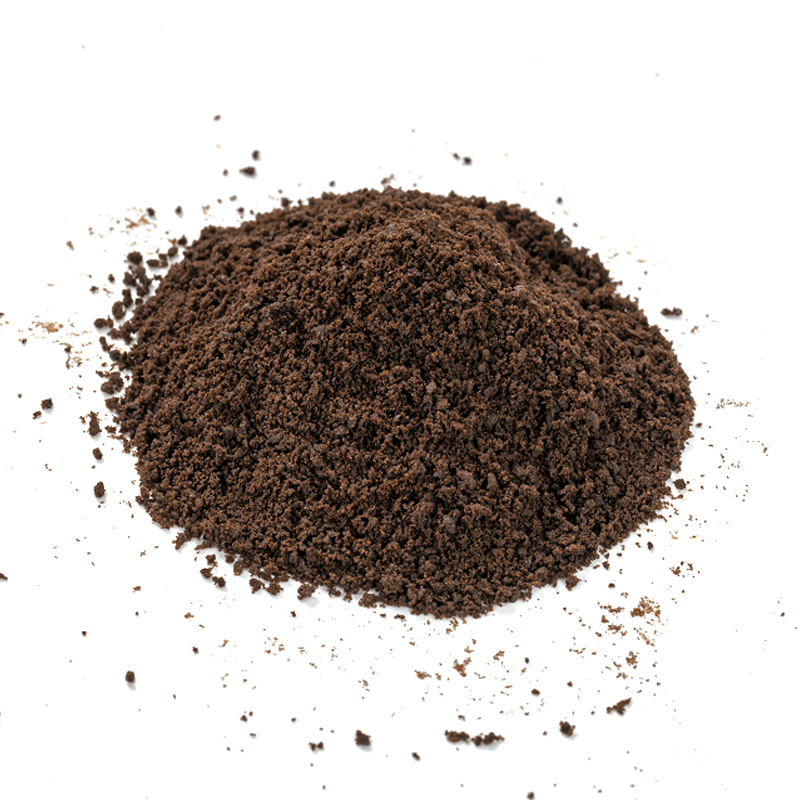
Cocoa Biscuit Powders are hailed as the "black gold ingredient" of the dessert world, becoming a core ingredient in the baking, cold beverage, and tea industries thanks to their rich, caramelized flavor and crispy textur...
See Details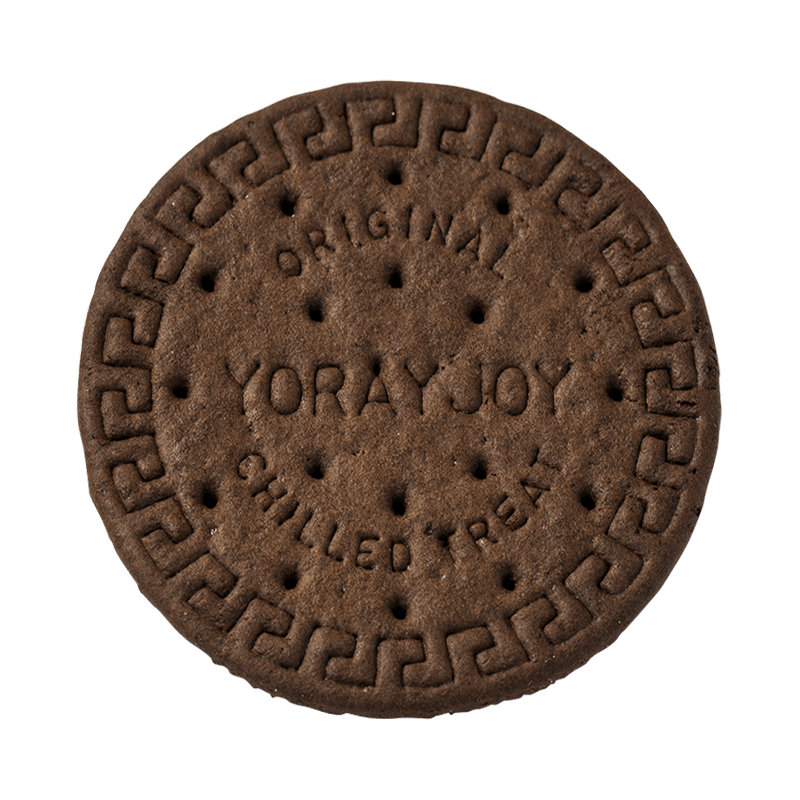
These Round Cocoa Hard Biscuits are specially designed for high-end frozen desserts and creative snacks, combining a crisp texture with excellent cold-chain transformation properties.
See Details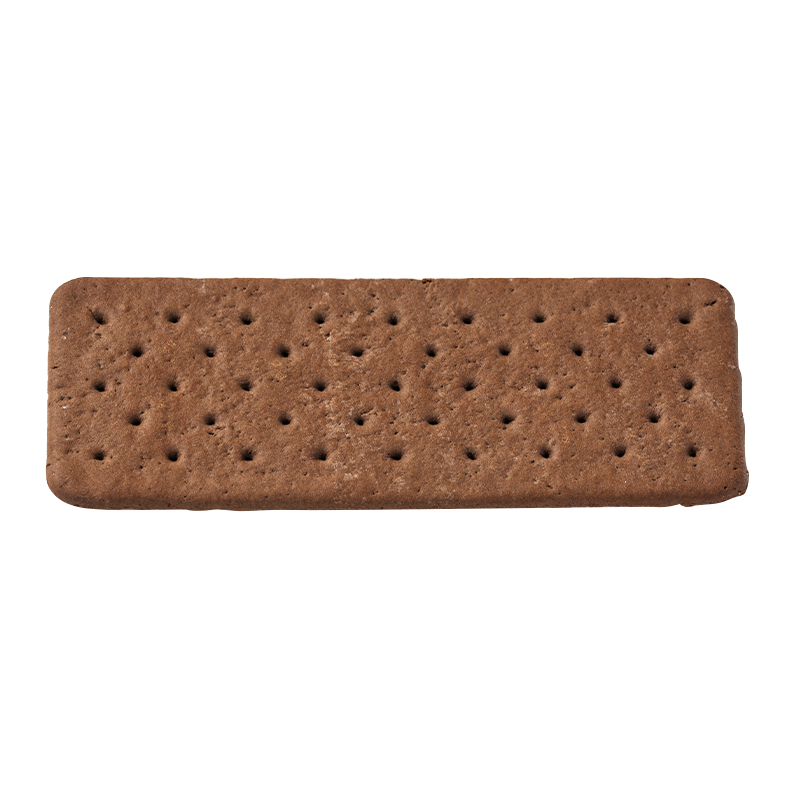
This rectangular cocoa hard biscuit is a classic baked semi-finished product, combining a crisp texture with excellent physical compatibility, making it an ideal base for frozen desserts and creative snacks.
See Details
Quick Links
Product Category
Code Preview

 English
 中文简体
中文简体