 English
 中文简体
中文简体
These Round Cocoa Hard Biscuits are specially designed for high-end frozen desserts and creative snacks, combining a crisp texture with excellent cold-chain transformation properties.
See Details

 2026.06.12
 Industry News
Content
An Ice Cream Sandwich Biscuit softens after freezing because its fat and sugar system is deliberately engineered to stay flexible at -18°C. This is not spoilage or a manufacturing flaw — it is the core formulation goal. A standard cracker or hard biscuit becomes brittle and shatters when frozen, because its solid fats crystallize fully and its sugars enter a glassy, rigid state. A purpose-built ice cream sandwich biscuit avoids both problems by using a blend of liquid oils, lower-melting sugars, and a crumb structure that absorbs moisture from the ice cream without losing its bite. The result is a biscuit that bends slightly under a bite instead of cracking into shards.
Manufacturers who specialize in producing biscuits for frozen applications typically rely on three interconnected adjustments. Understanding these helps explain why a homemade cookie often fails as an ice cream sandwich biscuit while a commercially formulated one does not.
| Lever | What It Does | Typical Ratio |
| Liquid oil vs. solid fat | Unsaturated oils (sunflower, canola, palm olein) stay fluid even at freezer temperatures, keeping the biscuit matrix pliable | 60-75% liquid oil to 25-40% solid fat |
| Sugar substitution | Invert sugar or glucose syrup replaces part of the sucrose, lowering the glass transition point so the biscuit stays in a rubbery state instead of turning glassy | 30-50% of total sucrose replaced |
| Crumb porosity and density | A more open, slightly porous biscuit crumb base absorbs moisture migration from the ice cream, which softens the structure further and prevents a hard frozen seal | Density tuned during baking and cooling stage |
Avoiding heavily hydrogenated, fully saturated fats is essential — these solidify into a hard, waxy texture under freezing and are the main reason older or poorly designed sandwich biscuits crack apart when bitten cold.
Beyond ice cream sandwiches, the same biscuit base material principles extend to cheesecake bases, biscuit cake bases, and biscuit crumb bases used across the bakery and dessert industry. A factory offering biscuit base material solutions usually supplies three main formats:
| Format | Best Use Case | Texture Notes |
| Whole hard biscuits | Ice Cream Sandwich Hard Biscuits, layered desserts | Crisp at room temperature, softens predictably when frozen against ice cream |
| Crushed cookie crumbs / cookie crumb base | Biscuit crumb base for cheesecake, no-bake tarts | Fine, even particle size for a compact, sliceable base |
| Cocoa biscuit crumbles or caramel biscuit crumbles | Topping, mix-in, or layering for cakes and frozen desserts | Coarser texture, adds visual contrast and crunch |
For an easy biscuit base recipe at home, a common starting ratio is 200g crushed cookie crumbs to 80-100g melted butter, pressed firmly and chilled for at least 30 minutes. Commercially, the best biscuit base for cheesecake tends to use a slightly coarser crumb than a fine powder, since this prevents the base from becoming overly compact or soggy once it absorbs moisture from the filling.
It is worth distinguishing between two product families that are often confused: Ice Cream Sandwich Crisp Biscuits and general-purpose chocolate cookie crumbs for baking. Both may look similar — dark, cocoa-colored, crumbly — but they are engineered for opposite outcomes.
Ice Cream Sandwich Biscuit Manufacturers design crisp biscuits to transition from crisp to soft once frozen against ice cream, with controlled moisture absorption built into the recipe. Chocolate cookie crumbs for baking, crushed cookie crumbs, and cocoa cookie crumbs for ice cream toppings, on the other hand, are designed to retain crunch even in cold or moist environments — they are meant to be a textural contrast inside the ice cream itself, such as in cookies-and-cream style products, rather than the outer shell.
This is why a Cocoa Biscuit Crumbles Manufacturer and a Sandwich Biscuit Factory often run separate production lines: one optimizes for moisture-resistant crunch (cookiecrumb used as a mix-in), and the other optimizes for controlled softening (the outer biscuit shell).
For desserts that need a layer to stay crunchy regardless of freezing — such as entremet bases, chocolate bars, or praline centers — feuilletine flakes (also called paillete feuilletine) are the standard ingredient. Crunchy feuilletine is made from very thin, caramelized crepe-like wafers broken into small flakes, then typically coated with chocolate or cocoa butter.
| Type | Primary Role | Common Pairing |
| Butter Feuilletine / Pure Butter Feuilletine | Adds a delicate, buttery crunch layer | Cheesecakes, mousse cakes |
| Chocolate Feuilletine / Cocoa Feuilletine | Combines crunch with cocoa flavor, holds texture in frozen desserts | Chocolate bars, praline centers, frozen entremets |
The reason feuilletine resists the softening that ice cream sandwich biscuits embrace comes down to fat content and structure: feuilletine flakes are coated in a high-cocoa-butter or chocolate layer that solidifies fully at freezer temperatures, sealing out moisture migration. A High-End Feuilletine Factory in China typically controls flake size (2-5mm), coating thickness, and cocoa butter ratio to keep this crunch stable for 12-18 months in frozen storage.
Biscuit spread products — including speculoos spread, biscuit butter spread, biscuit cookie butter, and caramel biscuit spread — are increasingly used as fillings or swirls inside ice cream sandwiches and biscuit cake bases, not just as standalone spreads.
Speculoos cookie butter and biscoff speculoos spread share a base of crushed spiced biscuits, sugar, and oil, blended to a smooth or crunchy (speculoos crunchy cookie butter) texture. A Caramel Biscuit Spread Manufacturer typically adjusts the sugar caramelization stage to control color depth and bitterness, while a Cocoa Cookie Spread Supplier focuses on cocoa percentage (usually 8-15%) to balance sweetness against chocolate intensity.
When used as a swirl inside an ice cream sandwich, these spreads need a slightly higher fat content (around 35-40%) than a jar-ready spread, so they remain soft and pipeable straight from the freezer rather than hardening into a solid layer.
For brands sourcing from a Sandwich Biscuit Factory, Premium Biscuit Spread Factory, or Wholesale Hard Biscuits for Ice Cream Production supplier, three practical checks help avoid texture problems after launch:
| Check | Why It Matters |
| Sample test at -18°C for 48 hours | Confirms whether the biscuit softens evenly or develops ice crystals at the biscuit-cream interface |
| Fat composition documentation | Verifies the liquid-to-solid fat ratio matches the target softening behavior, not just total fat percentage |
| Shelf-life data under freeze-thaw cycling | Important for products that may experience temperature fluctuation during distribution |
A Crunchy Biscuit Granules Factory supplying Cocoa Biscuit Crumbles or Caramel Biscuit Crumbles for inclusions should also provide particle size distribution data, since inconsistent granule sizes lead to uneven texture in the final ice cream product.
If an ice cream sandwich biscuit softens predictably and evenly after freezing, that is the formulation working as intended — a sign of correct fat-to-oil ratios and sugar selection. If it turns soggy, falls apart, or develops a hard icy shell instead, the issue usually traces back to either excessive moisture absorption (crumb too porous or too thin) or an incorrect fat blend (too much solid fat causing brittle cracking instead of gentle softening). Whether sourcing whole biscuits, a biscuit crumb base, feuilletine, or biscuit spreads, matching the fat and sugar profile to the storage temperature is the single most reliable predictor of final texture.
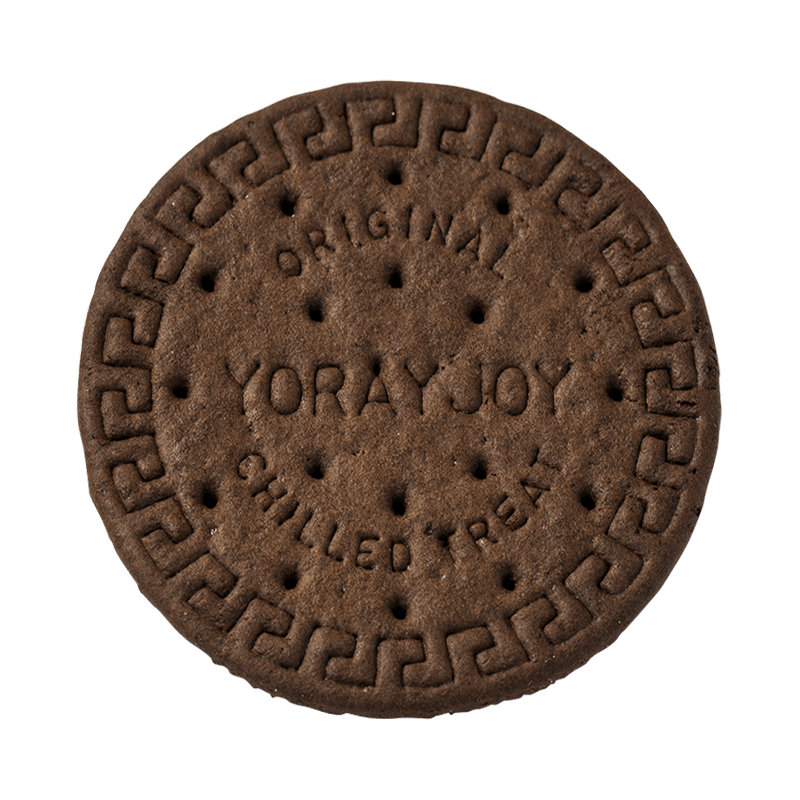
These Round Cocoa Hard Biscuits are specially designed for high-end frozen desserts and creative snacks, combining a crisp texture with excellent cold-chain transformation properties.
See Details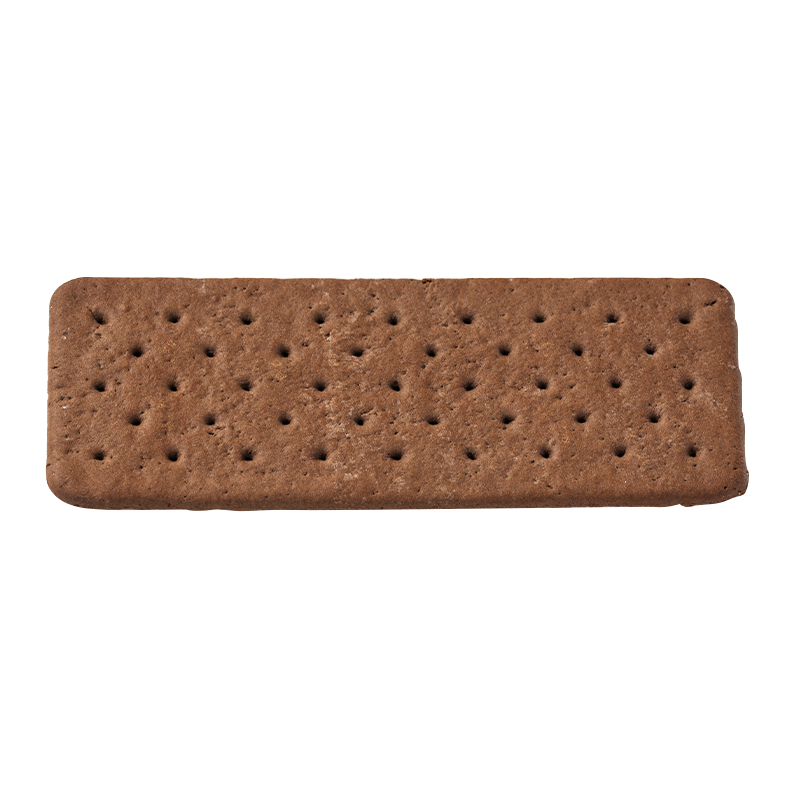
This rectangular cocoa hard biscuit is a classic baked semi-finished product, combining a crisp texture with excellent physical compatibility, making it an ideal base for frozen desserts and creative snacks.
See Details
These Round Butter Hard Biscuits combine classic flavor with versatile textures, making them the ideal base for ice cream sandwiches.
See Details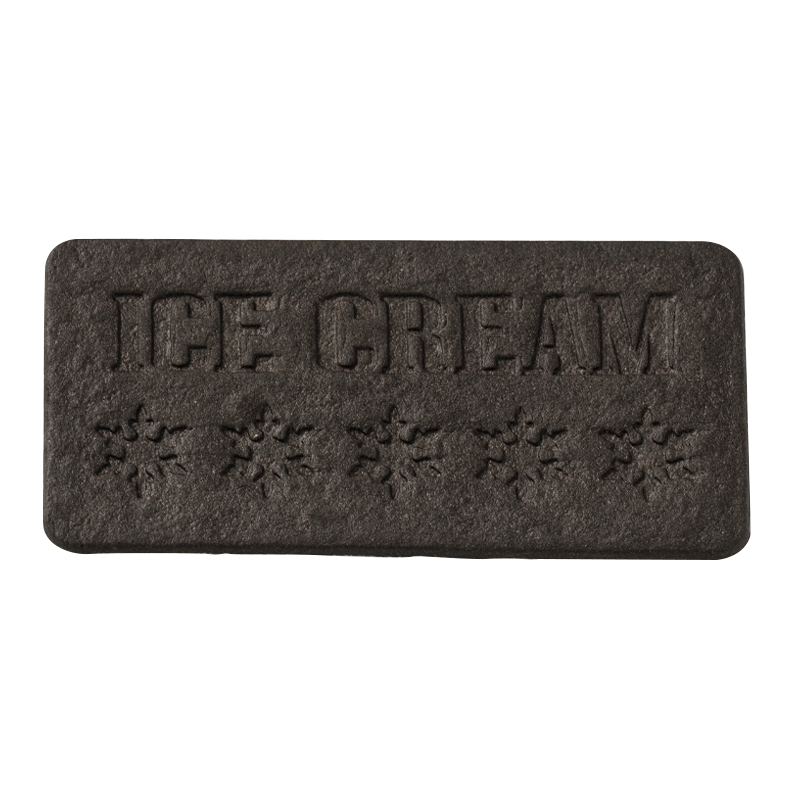
This rectangular cocoa crisp biscuit is the ideal shell for ice cream sandwiches. It continues the classic "Oreo" flavor profile and is optimized for cold chain environments.
See Details
This core component, specifically designed for premium ice cream, features a scientifically formulated high-fat and high-sugar ratio, providing both robust structural support and a melt-in-your-mouth crispness.
See Details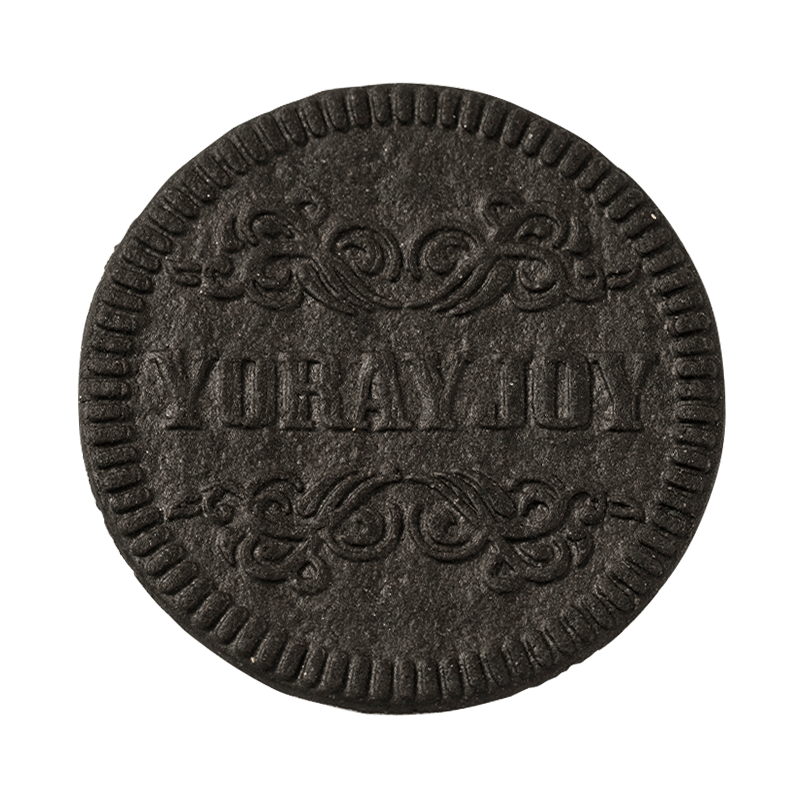
This product is a professional base ingredient specifically designed for high-end frozen desserts. It uses a high oil-to-sugar ratio and select low-gluten flour to create an exceptionally crisp texture that crumbles in y...
See Details
Quick Links
Product Category
Code Preview
