English
 中文简体
中文简体

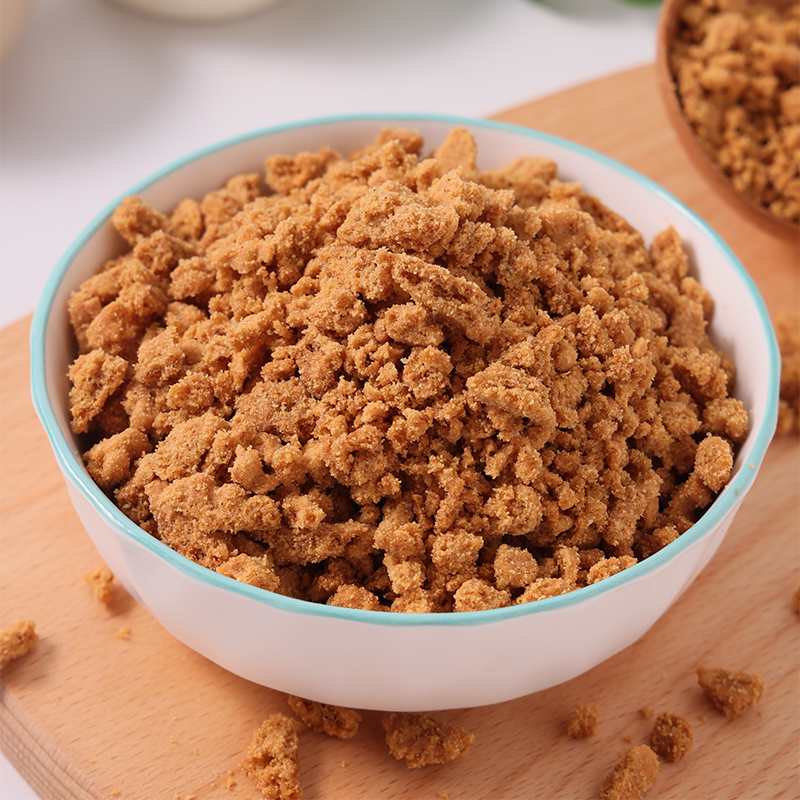
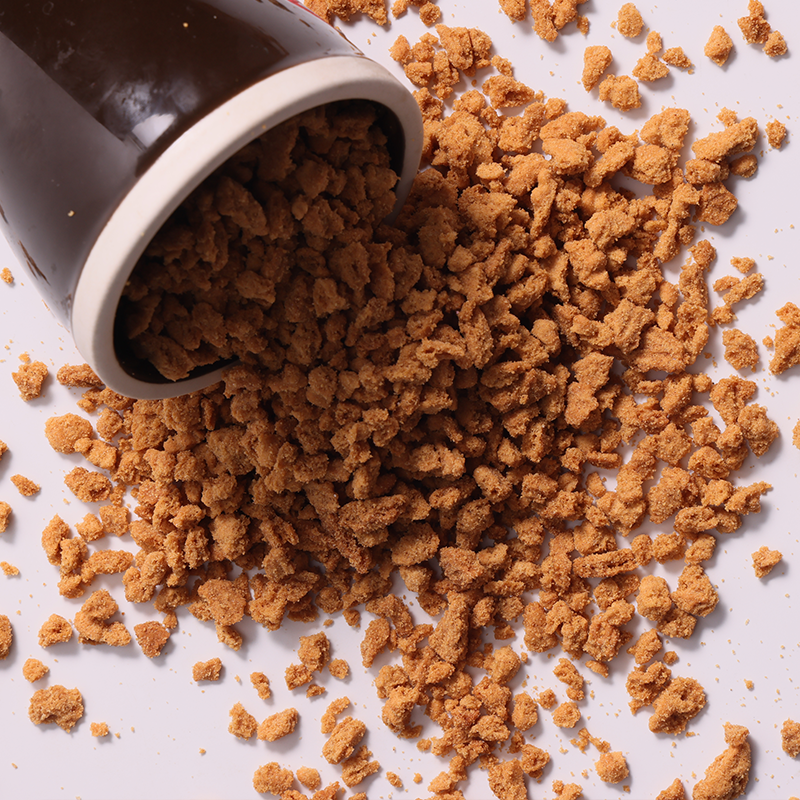
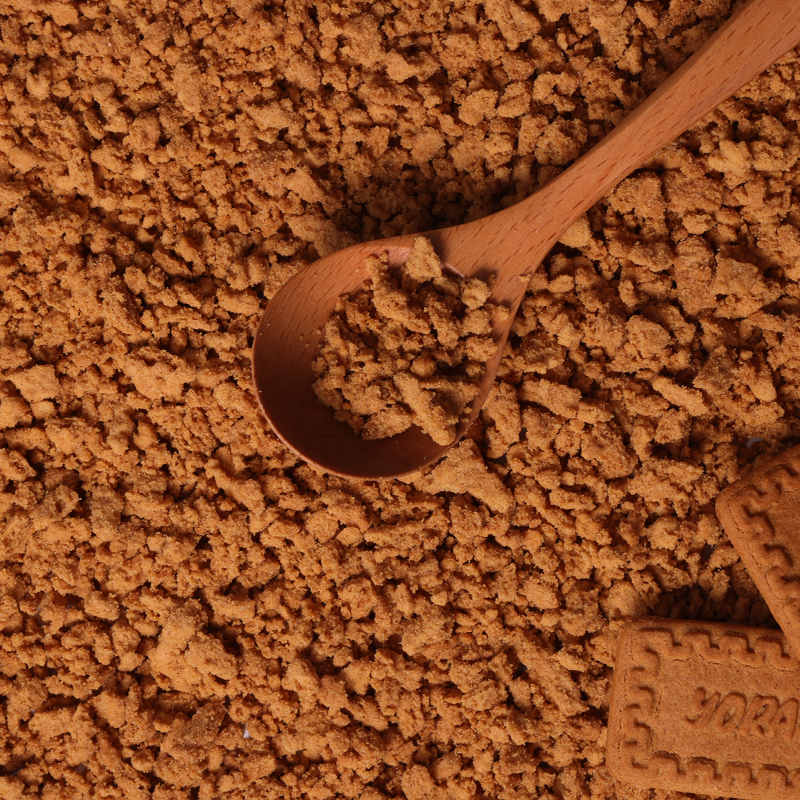


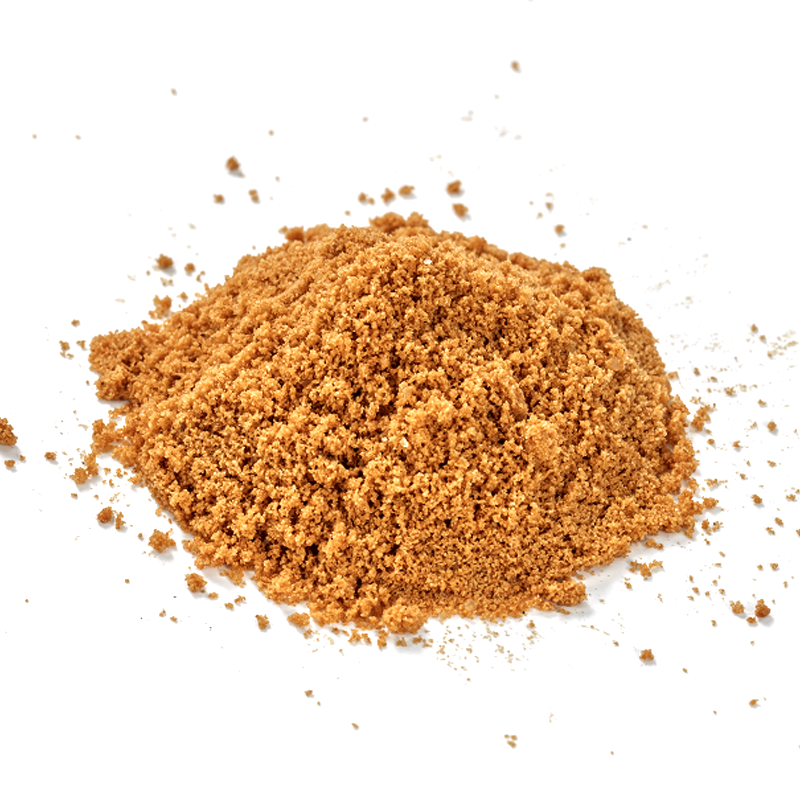
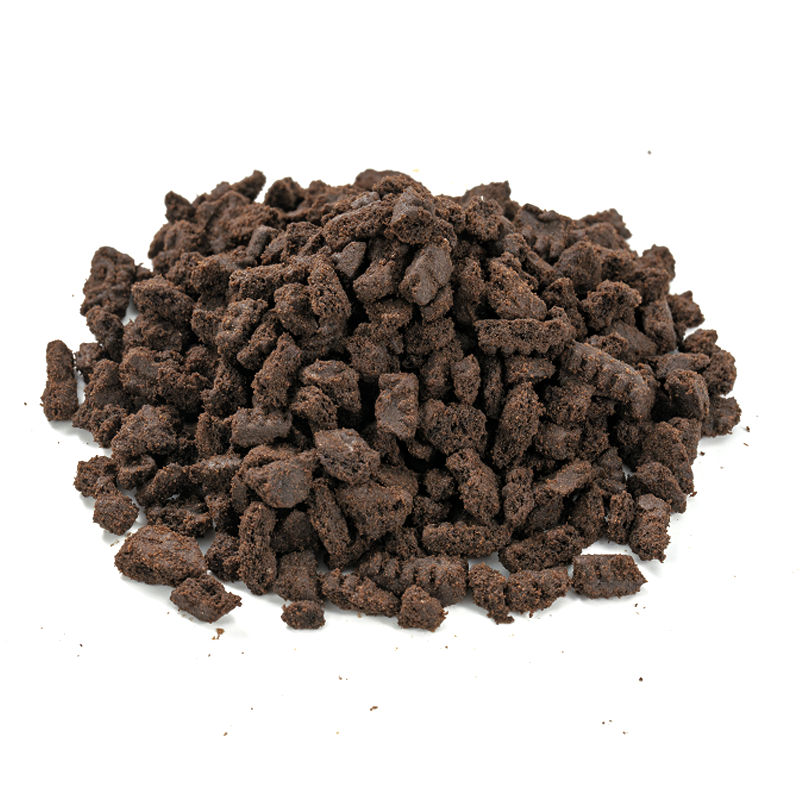
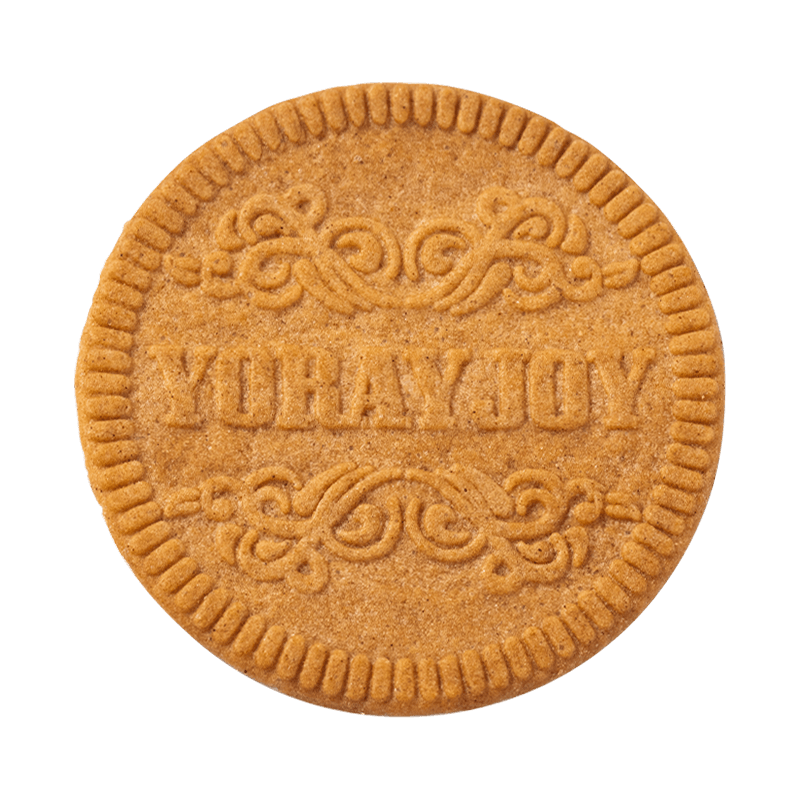
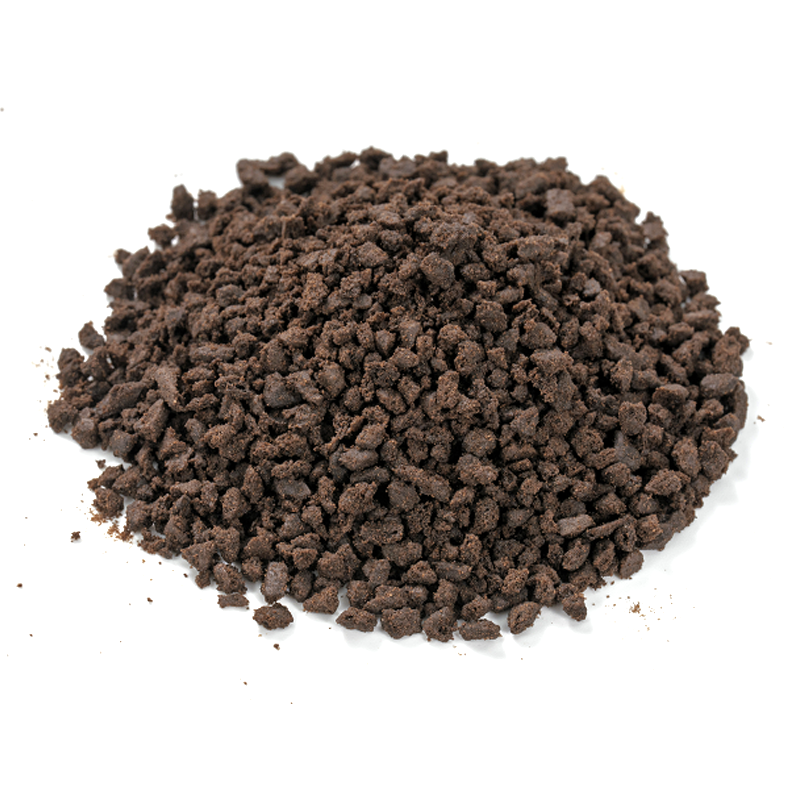
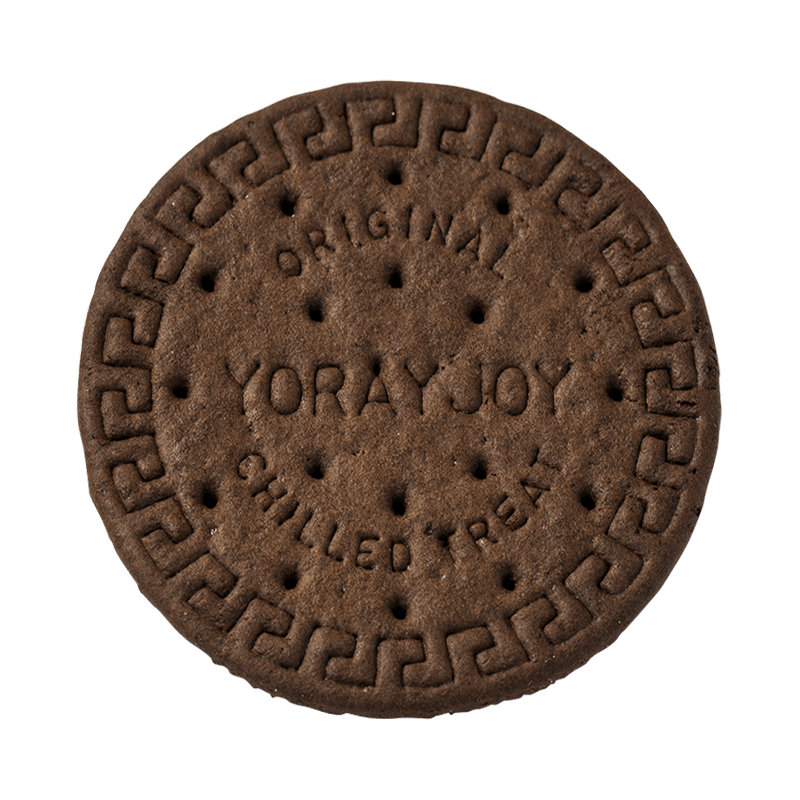
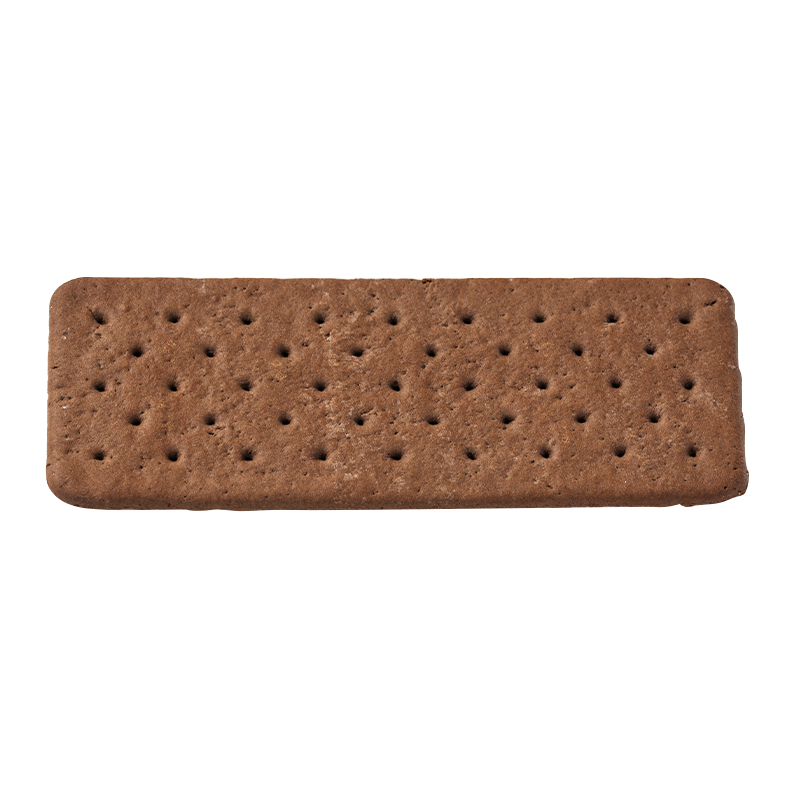
What Are Caramel Biscuit Crumbles?
Caramel Biscuit Crumbles are pre-processed biscuit base materials that combine the rich, buttery depth of caramel flavor with a crisp, granular texture, specifically engineered for use as inclusions, toppings, or layered components in finished food products. Unlike generic biscuit crumbs, they are not a byproduct of broken biscuits but a purpose-built ingredient manufactured to precise specifications of particle size, moisture content, flavor intensity, and structural integrity.
In the food manufacturing industry, these crumbles serve as functional flavor carriers and texture modifiers across categories including dairy desserts, frozen novelties, confectionery coatings, and milk tea beverages. Their dual role — delivering caramel taste while providing textural contrast — makes them a high-value ingredient in premium product formulations.
Caramel Biscuit Crumbles vs. Ordinary Biscuit Crumbs: Key Technical Differences
The distinction between Caramel Biscuit Crumbles and standard biscuit crumbs is significant from both a formulation and performance standpoint. The following table outlines the primary differences:
| Attribute | Caramel Biscuit Crumbles | Ordinary Biscuit Crumbs |
|---|---|---|
| Flavor Profile | Distinct caramel, buttery, toasted sugar notes | Neutral wheat/grain flavor |
| Production Method | Intentionally formulated and milled | Often derived from biscuit surplus/waste |
| Particle Size Control | Standardized (e.g., 2–8 mm range per spec) | Inconsistent, variable |
| Moisture Resistance | Engineered for freeze/thaw and dairy contact | Typically not optimized for wet environments |
| Texture Longevity | Crunch retained over shelf life | Prone to sogginess on contact with moisture |
| Application Range | Dairy, frozen, chocolate, beverages | Primarily coatings, breading |
The most operationally critical difference is moisture management. When embedded in ice cream or layered in chilled desserts, ordinary crumbs typically absorb moisture within 24–48 hours and lose structural integrity. Caramel Biscuit Crumbles designed for these applications undergo fat-coating or low-water-activity formulation processes that extend their crunch window to match or exceed product shelf life.
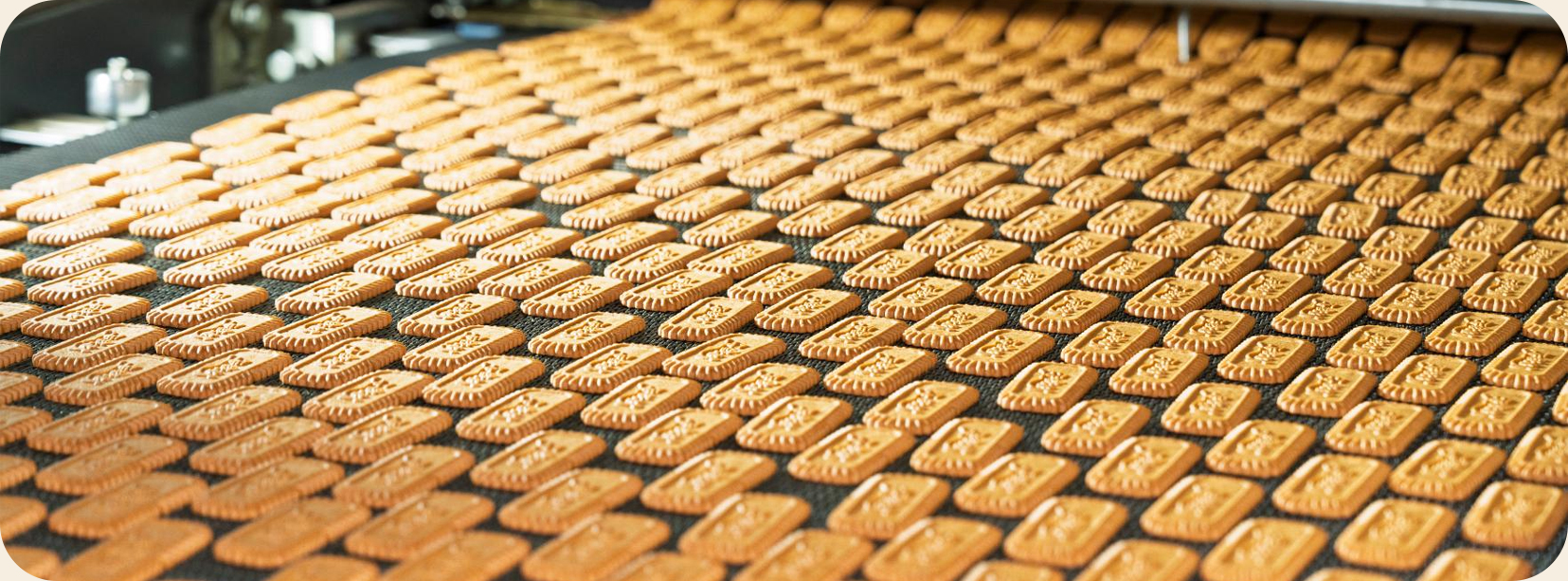
How Caramel Biscuit Crumbles Are Manufactured: The Core Process
Understanding the production process helps procurement teams and R&D departments evaluate supplier quality and set accurate specifications. The standard manufacturing process involves the following stages:
- Raw ingredient selection: Wheat flour, sugar, vegetable fat, and caramel flavoring agents are selected for consistent Maillard reaction performance during baking.
- Dough preparation and baking: Dough is mixed to a controlled hydration level and baked at temperatures typically ranging from 160°C to 200°C. The baking curve directly determines caramel depth and color (measured by the CIELAB color system, typically targeting L* values between 45–60 for amber-toned crumbles).
- Milling and sieving: Baked sheets are milled and passed through multi-stage sieves to achieve target granulometry. Common commercial cuts include fine (0.5–2 mm), medium (2–5 mm), and coarse (5–10 mm).
- Fat enrobing or moisture barrier treatment: For moisture-sensitive applications, crumbles are coated with cocoa butter, hydrogenated vegetable fat, or similar barriers to delay moisture absorption.
- Quality control and packaging: Final products are tested for water activity (target Aw ≤ 0.4), fat content, particle size distribution, and microbiological standards before nitrogen-flushed or vacuum packaging.
Primary Application Sectors and Functional Roles
Caramel Biscuit Crumbles function differently depending on the product category. Below are the main sectors and how the ingredient performs in each:
Dairy and Frozen Desserts
This is the largest application segment. In ice cream, crumbles serve as inclusions mixed directly into the base or layered as variegate components. Products with biscuit inclusions demonstrate up to 18% higher average retail price positioning in premium dairy lines, reflecting consumer willingness to pay for textural complexity. For frozen desserts, freeze-stable crumbles that retain crunch at −18°C are essential; this requires water activity control below 0.35 and fat content above 20%.
Chocolate and Confectionery
In tablet chocolates and pralines, Caramel Biscuit Crumbles provide the signature snap-crunch contrast popular in products modeled after caramelized wafer bars. The crumbles must be pre-dried to Aw below 0.3 before incorporation to prevent fat bloom acceleration in the chocolate shell. Particle sizes of 3–6 mm are most common for molded applications.
Milk Tea and Beverage Toppings
The bubble tea and specialty beverage sector has driven significant growth in crumble demand since 2020. Used as floating toppings or mixed-in texturizers, crumbles in this context must maintain visible structure for 3–8 minutes after contact with liquid — a performance window that differs substantially from long-shelf-life embedded formats. Beverage-grade crumbles are increasingly specified with hydrophobic surface treatment to extend that float/crunch window.
Bakery Toppings and Cheesecake Bases
In bakery and patisserie applications, coarser crumble cuts (6–12 mm) are used as decorative toppings on cheesecakes, mousses, and tarts, or compressed with butter to form no-bake crust layers. Here, the caramel note creates visual and aromatic differentiation that plain graham or digestive crumbs cannot replicate.
Key Specifications Buyers Should Require from Suppliers
When sourcing Caramel Biscuit Crumbles, procurement teams should request and verify the following technical parameters to ensure product compatibility:
| Parameter | Typical Range / Standard | Why It Matters |
|---|---|---|
| Water Activity (Aw) | ≤ 0.40 | Controls microbial safety and texture stability |
| Moisture Content | ≤ 3.5% | Directly impacts crispness and shelf life |
| Fat Content | 18–28% | Influences mouthfeel and moisture barrier performance |
| Particle Size (D90) | Application-specific (2–10 mm) | Affects texture uniformity and dosing accuracy |
| Color (L* value) | 45–65 (CIELAB) | Ensures batch-to-batch visual consistency |
| Total Plate Count | ≤ 10,000 CFU/g | Standard food safety threshold |
| Allergen Declaration | Gluten, milk, soy (minimum) | Required for labeling compliance in most markets |
Frequently Asked Questions about Caramel Biscuit Crumbles
Can Caramel Biscuit Crumbles be used directly in frozen applications without additional treatment?
In many cases, yes — but performance depends on supplier formulation. Freeze-stable variants pre-treated with fat barriers can maintain acceptable crunch for 12–18 months at −18°C, while untreated crumbles may begin to soften within 4–6 weeks in high-moisture ice cream bases. Always request freeze-thaw stability test data from the supplier before integrating into frozen SKUs.
What is the typical minimum order quantity (MOQ) for industrial procurement?
MOQs vary by manufacturer scale and customization level. Standard catalog products from specialized biscuit base material manufacturers typically start at 500 kg to 1 MT per SKU. Custom formulations — including proprietary flavor profiles, organic-certified versions, or specific particle cuts — generally require 2–5 MT minimum to justify production changeovers.
How does caramel intensity vary across product grades, and how is it measured?
Caramel intensity is primarily controlled through baking temperature curves and sugar-to-fat ratios. It is evaluated through a combination of sensory panel scoring (typically on a 1–9 hedonic scale for caramel character) and instrumental color measurement using the CIELAB system. A darker L* reading (lower value) generally correlates with more pronounced caramel bitterness, while lighter readings reflect a milder, creamier caramel note. Buyers should request flavor profile documentation alongside color specs to align product character with target consumer expectations.
Are there clean-label or allergen-free versions available?
Clean-label Caramel Biscuit Crumbles — formulated without artificial flavors, hydrogenated fats, or synthetic emulsifiers — are available from leading manufacturers, though they represent a smaller portion of current production capacity. Gluten-free versions using rice or oat flour bases exist but carry a 20–40% cost premium due to dedicated production line requirements and certification overhead. Buyers targeting free-from positioning should confirm that the manufacturing facility holds the appropriate third-party certifications (e.g., BRCGS, IFS, or GFCO for gluten-free).
What shelf life can be expected under standard storage conditions?
Under recommended storage conditions of temperature ≤25°C and relative humidity ≤60%, standard Caramel Biscuit Crumbles carry shelf lives of 9 to 18 months. Nitrogen-flushed packaging extends this toward the upper range. Products stored in warehouse environments with temperature fluctuations may experience accelerated flavor degradation due to fat oxidation, so cold-chain logistics are advisable for premium formulations with higher unsaturated fat content.
How do manufacturers support new product development (NPD) pipelines?
Leading suppliers offer application-specific sample kits, sensory evaluation support, and co-development services for customers launching new formats. For example, a beverage brand reformulating a milk tea SKU would typically receive multiple crumble cuts with varying caramel intensities to test in trial batches. Suppliers with dedicated R&D capabilities can typically deliver custom sample runs within 2–4 weeks, significantly compressing NPD timelines compared to developing in-house biscuit crumble processing capability.
Industry Trends Shaping Caramel Biscuit Crumble Demand
Several converging trends are expanding both the volume and sophistication of demand for Caramel Biscuit Crumbles across food categories:
- Premiumization in frozen dairy: As ice cream brands compete on ingredient storytelling, biscuit inclusions have become a key differentiator. Brands are moving from generic "cookie bits" to named, characterized inclusions with distinct caramel profiles.
- Growth of specialty tea beverages: The global bubble tea market, projected to exceed USD 5 billion by 2027, has introduced crumble toppings as a mainstream category. Brands in China, Southeast Asia, and increasingly Western markets are incorporating caramel biscuit elements as signature toppers.
- Demand for multi-sensory textures: Consumer research consistently shows that products offering three or more distinct textural layers command higher purchase intent. Caramel crumbles enable this without requiring complex in-house processing.
- Sustainability pressure on ingredient sourcing: Buyers increasingly require traceability documentation for key raw materials including palm oil and wheat. Suppliers with transparent supply chains and sustainability certifications (e.g., RSPO for palm derivatives) are gaining procurement preference.
- Customization as competitive advantage: Manufacturers who offer modular customization — adjustable particle size, flavor intensity, and coating type — are better positioned to support fast-moving NPD cycles across their customer base.