English
 中文简体
中文简体

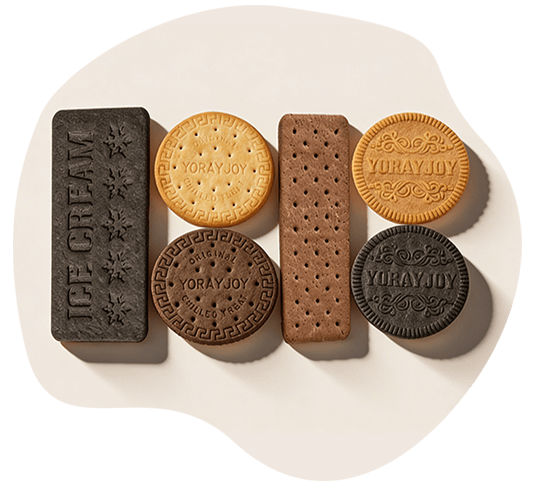
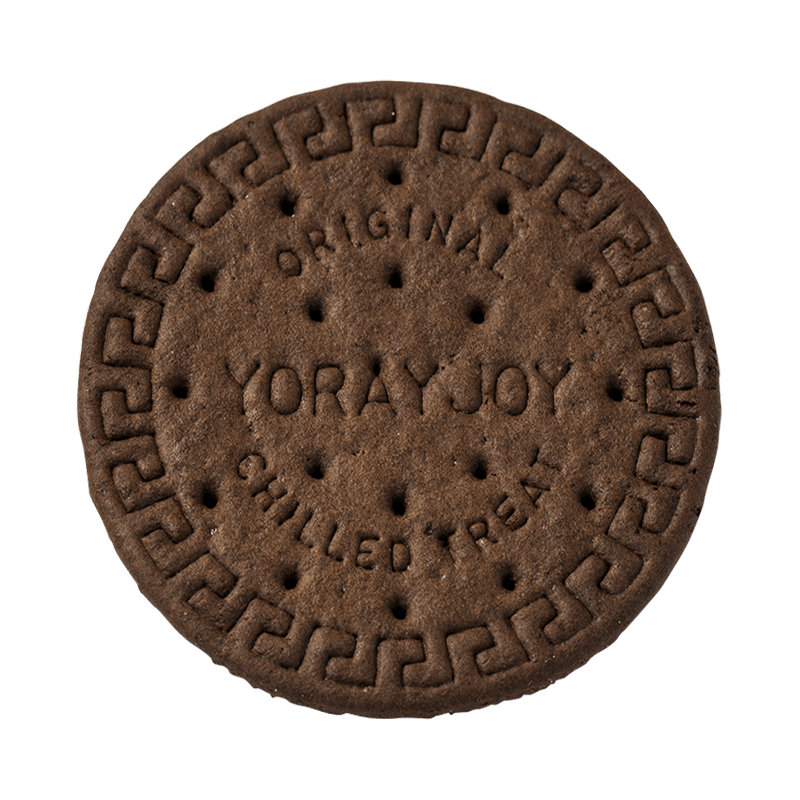
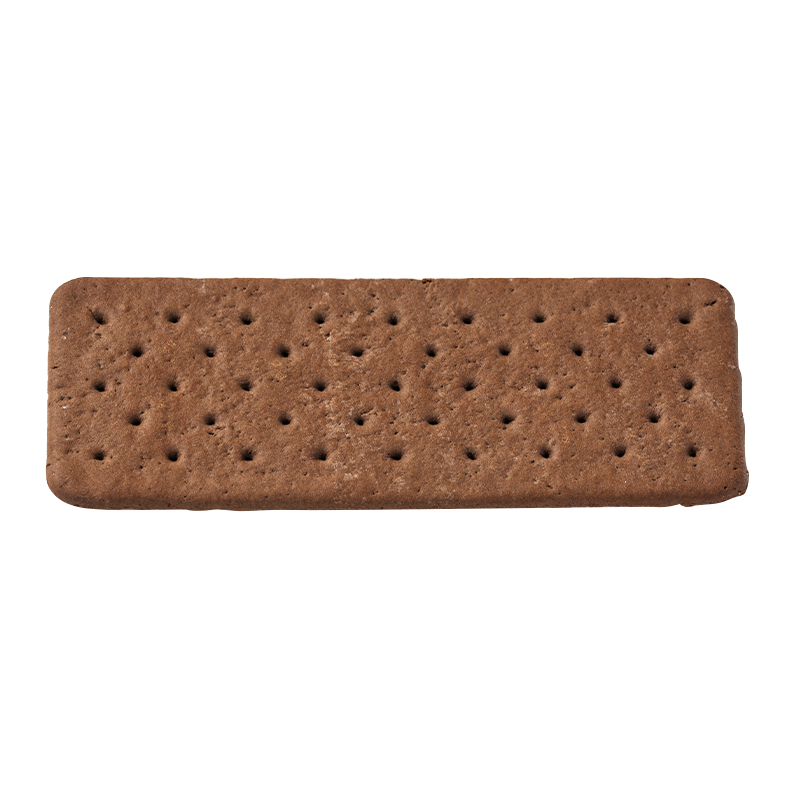

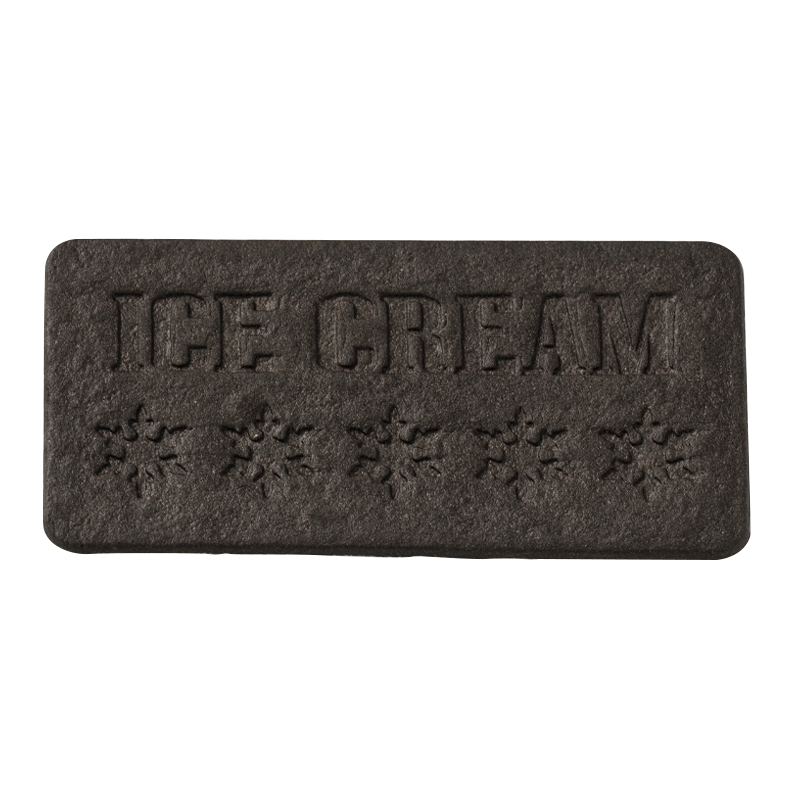

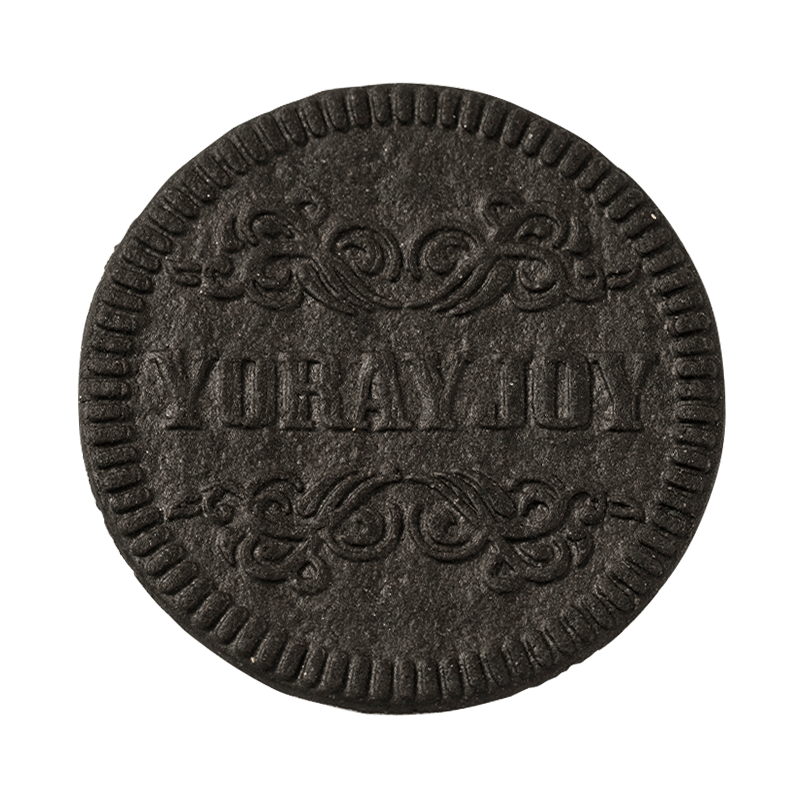




What Is an Ice Cream Sandwich Biscuit?
An ice cream sandwich biscuit is a specially engineered wafer or cookie layer designed to encapsulate ice cream fillings without becoming soggy, crumbling during handling, or losing structural integrity during freeze-thaw cycles. Unlike standard biscuits consumed at ambient temperature, ice cream sandwich biscuits must maintain a soft, pliable bite texture even at –18°C — the standard commercial storage temperature for frozen confections.
The key performance benchmark: a well-formulated ice cream sandwich biscuit should not crack or shatter when bitten straight from the freezer, yet must be firm enough to hold shape during packaging and distribution. This dual requirement drives nearly all formulation and manufacturing decisions in the category.
Ice Cream Sandwich Biscuit vs. Regular Sandwich Biscuit: Core Differences
The differences between ice cream sandwich biscuits and regular sandwich biscuits go far beyond temperature tolerance. They diverge in formulation chemistry, moisture management, fat selection, and texture engineering.
| Parameter | Ice Cream Sandwich Biscuit | Regular Sandwich Biscuit |
|---|---|---|
| Storage Temperature | –18°C (frozen) | 18–25°C (ambient) |
| Target Texture at Use | Soft, pliable, non-shattering | Crisp, snappy, crunchy |
| Fat Type | High unsaturated or liquid oils to stay pliable when cold | Partially hydrogenated or solid fats for crunch |
| Sugar Profile | Higher invert sugar/fructose ratio to depress the freezing point | Standard sucrose or glucose syrup |
| Water Activity (Aw) | Carefully controlled to resist moisture migration from ice cream | Low Aw for shelf stability at room temperature |
| Thickness | Typically 4–8 mm (thinner for wafer types) | Typically 6–12 mm |
| Chocolate Coating | Often, compound chocolate is adapted for freeze stability | Standard couverture or compound |
Critical Formulation Factors in Ice Cream Sandwich Biscuit Production
Fat Selection and Frozen Texture
Fat is the single most influential ingredient in determining frozen biscuit texture. Saturated fats solidify at low temperatures, producing a hard, tooth-shattering biscuit. Liquid oils — such as sunflower, canola, or palm olein — remain fluid at –18°C, keeping the biscuit matrix soft and compliant. Industry practice typically blends fats to balance freeze-softness with structural cohesion during processing; a common formulation uses 60–75% unsaturated oil with 25–40% solid fat to maintain shape on the production line while achieving the correct bite at the point of consumption.
Sugar Engineering for Freezing-Point Depression
Sugar type directly influences how a biscuit behaves when frozen. Invert sugar and fructose have a lower glass transition temperature than sucrose, which keeps the biscuit in a rubbery rather than glassy state at freezer temperatures. Formulators typically replace 30–50% of sucrose with invert sugar or high-fructose corn syrup to achieve this effect. Maltitol, a sugar alcohol common in reduced-sugar lines, also offers excellent freeze-texture performance due to its hygroscopic properties.
Moisture Migration Control
Ice cream contains significant free water. Without a moisture barrier, this water migrates into the biscuit layer, causing sogginess over the shelf life. Solutions include:
- Applying a thin fat-based barrier coating (e.g., compound chocolate or cocoa butter spray) to the biscuit's inner face
- Formulating biscuits with lower water activity (Aw target: 0.3–0.45) to create a thermodynamic gradient that slows migration
- Using high-amylose starch or modified starch to slow moisture absorption kinetics
Cocoa and Chocolate Incorporation
Chocolate ice cream sandwich biscuits — the most commercially dominant variant — present an additional challenge: cocoa powder absorbs fat and competes with the biscuit matrix for moisture. Dutch-processed cocoa (pH 7–8) is preferred over natural cocoa (pH 5–6) because its reduced acidity minimizes interaction with leavening agents and produces a more stable, darker color that consumers associate with premium products. Cocoa inclusion rates typically range from 5% to 12% of flour weight, depending on flavor intensity targets.
Manufacturing Process Overview
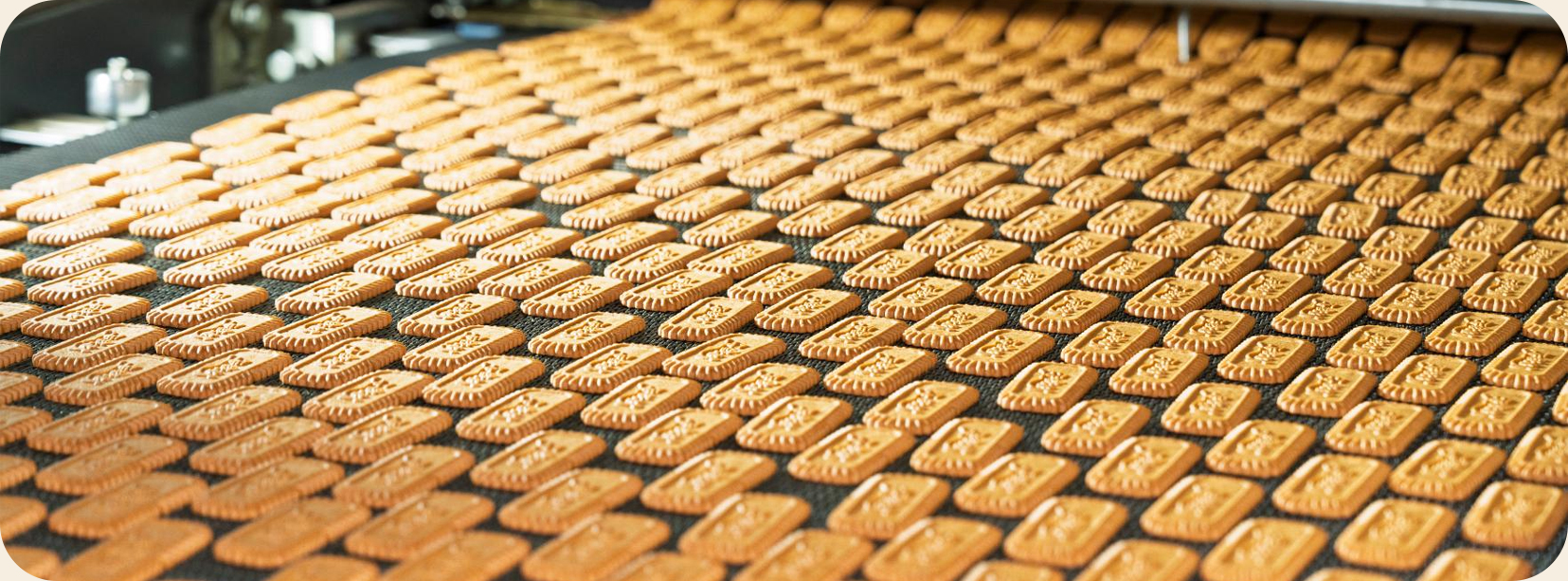
The production of ice cream sandwich biscuits follows a distinct sequence that differs from ambient biscuit manufacturing in several key stages:
- Dough Preparation: Continuous mixing systems are preferred for consistent fat dispersion. Dough temperature is tightly controlled (typically 18–22°C) to prevent premature fat melting.
- Sheeting and Cutting / Rotary Moulding: Wafer-type ice cream biscuits use sheeting lines; moulded cookie types use rotary moulders. Sheet thickness uniformity (±0.2 mm tolerance) is critical for consistent sandwich assembly.
- Baking: Lower baking temperatures (150–170°C vs. 180–210°C for standard biscuits) are used to limit surface hardening. Bake time is adjusted to achieve a final moisture content of 3–5%, higher than regular biscuits (1–2%), intentionally retaining flexibility.
- Cooling: Rapid cooling tunnels bring biscuits to near-ambient temperature before coating or assembly. Inadequate cooling causes condensation and moisture uptake.
- Barrier Coating (optional but common): Automated spray or enrobing systems apply a fat-based coating to the biscuit face that will contact ice cream.
- Sandwich Assembly and Freezing: Ice cream is deposited onto one biscuit layer; the second is applied under controlled pressure. The assembled sandwich enters a hardening tunnel at –30°C to –35°C before packaging.
Key Quality Control Checkpoints
- Biscuit breaking force at –18°C: target <15 N for non-shattering bite (measured by texture analyzer)
- Dimensional tolerance: ±1 mm on length and width for automated sandwich alignment
- Color consistency: L* value ±2 units on the CIE colorimetry scale
- Shelf-life stability test: no crumbling, sogginess, or fat bloom after 12 months at –18°C
Market Landscape and Consumer Trends
The global ice cream market was valued at approximately USD 97 billion in 2023, with ice cream sandwiches representing one of the fastest-growing format segments, driven by convenience, portion control, and premiumization. Several notable industry trends are reshaping what buyers demand from sandwich biscuit suppliers:
Premiumization and Chocolate Heritage Branding
Leading ice cream brands are partnering with well-known chocolate or biscuit heritage brands to co-brand sandwich products. A dark Belgian chocolate biscuit base paired with single-origin ice cream, for example, commands a retail price premium of 40–80% over standard products. This trend elevates the biscuit base from commodity component to branded ingredient — shifting procurement decisions toward suppliers with verifiable flavor profiles and clean-label ingredient lists.
New Retail and Tea Beverage Channel Expansion
Specialty tea beverage chains — particularly in East and Southeast Asian markets — have introduced ice cream sandwich formats as limited-edition or seasonal SKUs. These channels require smaller minimum order quantities, faster NPD (new product development) cycles of 4–8 weeks, and biscuit bases adaptable to unconventional flavors (matcha, taro, black sesame). This has driven demand for flexible sandwich biscuit factories capable of rapid formulation iteration.
Functional and Better-For-You Variants
Reduced-sugar, high-protein, and gluten-free ice cream sandwich biscuits are gaining shelf space. Protein enrichment (typically via whey protein isolate or pea protein at 5–10% substitution for flour) presents formulation challenges as protein increases dough hardness at frozen temperatures. Gluten-free variants using rice flour or oat flour blends require reformulation of the entire fat-sugar-starch system to maintain cohesion and freeze-softness.
Frequently Asked Questions About Ice Cream Sandwich Biscuits
Why do ice cream sandwich biscuits stay soft in the freezer while regular cookies turn rock-hard?
The softness comes from three formulation strategies working in combination: liquid oils that don't solidify at low temperatures, high levels of invert or fructose-based sugars that depress the glass transition temperature, and a slightly higher retained moisture content (3–5% vs. 1–2% for regular biscuits). Regular cookies are optimized for crunch at room temperature — their high saturated fat and sucrose content become hard and brittle when frozen.
Can any sandwich biscuit be used as a base for ice cream sandwiches?
Technically, any biscuit can be assembled with ice cream, but only purpose-formulated ice cream sandwich biscuits will maintain acceptable texture and structural integrity over a commercial shelf life (typically 12–18 months at –18°C). Standard biscuits will become either rock-hard (shattering on bite) or soggy (from moisture migration) within days to weeks. For commercial production, using a dedicated ice cream sandwich biscuit base is essential.
What is the typical shelf life of a chocolate ice cream sandwich biscuit base?
As an unassembled component stored at ambient temperature (15–20°C, humidity-controlled), chocolate ice cream sandwich biscuit bases typically have a shelf life of 6–12 months. Once assembled with ice cream and stored at –18°C, the finished product shelf life is usually 12–18 months, contingent on moisture migration control and packaging integrity.
What certifications should buyers look for when sourcing ice cream sandwich biscuits?
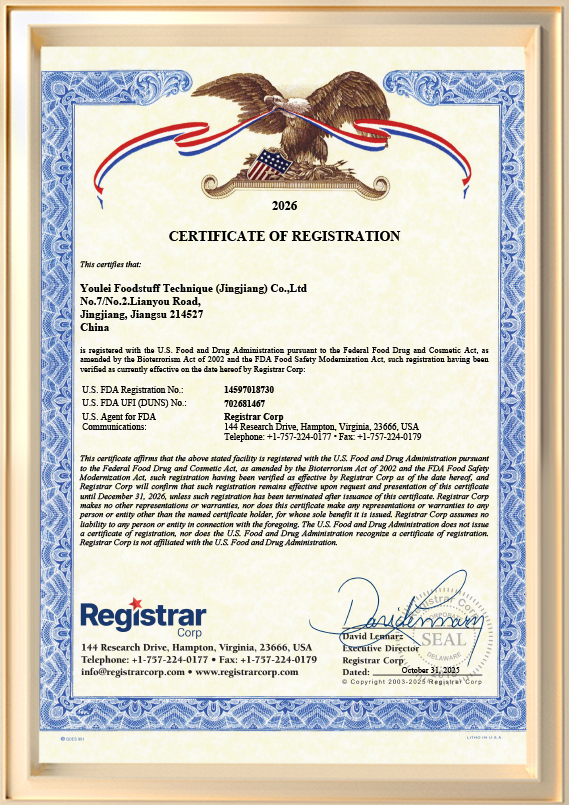
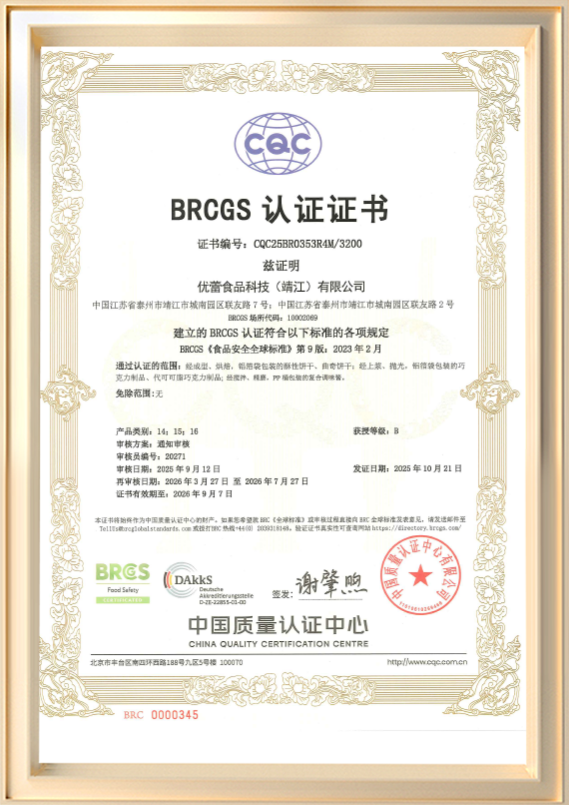
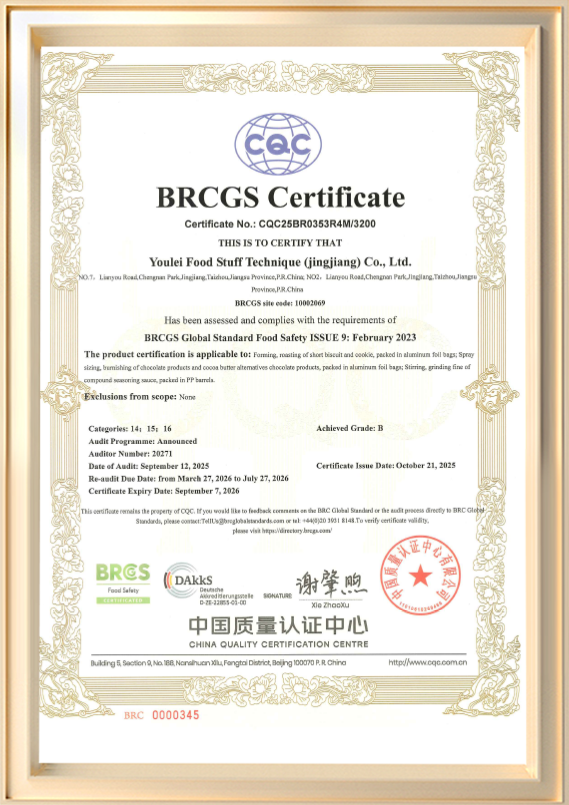
Key certifications for a sandwich biscuit factory supplying ice cream manufacturers include:
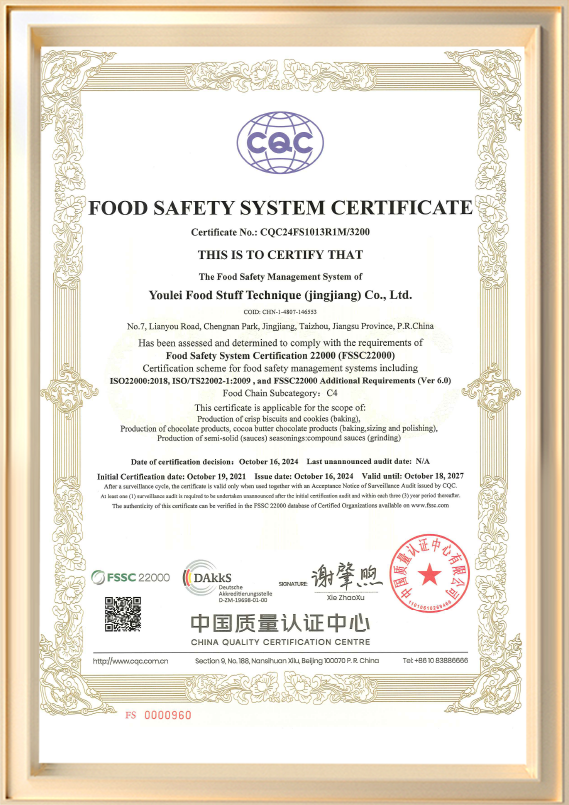
- FSSC 22000 or BRC Global Standard for Food Safety — the baseline requirement for major retail and branded ice cream customers
- Halal and Kosher certification — required for export to Middle Eastern and Jewish markets, and increasingly demanded by global multinationals for supply chain simplification
- Allergen management certification — particularly important for products targeting schools, healthcare, or export markets with strict labeling laws
- ISO 14001 (Environmental Management) — increasingly requested by sustainability-focused brands
How do ice cream sandwich biscuit manufacturers support new product development for brand customers?
Leading sandwich biscuit manufacturers offer structured NPD services including bespoke formulation development, pilot-scale trial baking, freeze-thaw stability testing, and sensory evaluation panels. For brand customers launching seasonal or limited-edition products, compressed NPD timelines of 4–8 weeks (from brief to approved sample) are increasingly expected. Manufacturers with in-house R&D labs, application kitchens, and direct access to ingredient supplier networks are best positioned to deliver at this pace.