 English
 中文简体
中文简体
These Round Cocoa Hard Biscuits are specially designed for high-end frozen desserts and creative snacks, combining a crisp texture with excellent cold-chain transformation properties.
See Details

 2026.07.31
 Industry News
Content
A dependable ice cream sandwich biscuit stays pliable at minus eighteen degrees, resists cracking on the first bite, and keeps its shape without letting moisture from the filling turn it soggy. Reaching that balance is not a matter of picking any bakery item off a shelf — it comes from a formulated biscuit base built with the freezer in mind, from fat selection through to final coating. Everything below breaks down what separates a working frozen-dessert biscuit from an ordinary one, and how crumbs, spreads and feuilletine fit around it.
Most biscuit doughs are built for a completely different job: staying crisp on a shelf at room temperature. Drop that same product to freezer temperature and two things tend to happen. Saturated fats harden into a glassy structure that shatters under bite pressure, and without a barrier layer, water from the ice cream slowly works its way into the biscuit, turning a crunchy edge into a soft, unpleasant one within days. A true frozen-dessert biscuit crumb base avoids both failure modes by design rather than by luck, using liquid oils instead of hard fats and a moisture-resistant surface at the point of contact with the filling.
Three variables do most of the work in an easy biscuit base recipe intended for freezer use, and each one is adjustable depending on the finished texture a brand wants.
| Formulation lever | Typical approach | Effect at low temperature |
| Fat blend | 60 to 75 percent unsaturated oil combined with solid fat for line stability | Keeps the bite soft instead of glassy |
| Sugar system | 30 to 50 percent of sucrose replaced with invert sugar or fructose syrup | Lowers the glass transition point, delaying hardening |
| Residual moisture | Final bake moisture held near 3 to 5 percent | Preserves flexibility without inviting sogginess |
These same principles carry over when a biscuit is used as a biscuit cake base or a best biscuit base for cheesecake in chilled applications — the fat and sugar ratios simply shift toward a firmer bite since the product is refrigerated rather than frozen. A supplier working across both categories usually keeps parallel formulations rather than trying to stretch one recipe across two very different storage conditions.
Buyers sourcing from a Sandwich Biscuit Factory generally choose between two structural families. Hard biscuits are denser, hold a defined shape under pressure, and suit machine-assembled sandwiches at scale. Crisp biscuits are thinner and lighter in bite, closer to a wafer, and are often selected when the brand wants the biscuit layer to read as delicate rather than substantial. Neither is universally better — the choice comes down to the assembly line speed, the fill weight of the ice cream, and how the finished product is meant to feel in hand.
A working reference of the biscuit formats commonly requested by frozen dessert and bakery brands, spanning cocoa, butter and caramel profiles across both hard and crisp structures.
Cookie crumbs serve a different function than the biscuit layer itself — they are folded into the ice cream body, used to coat exposed edges, or layered between components for texture contrast. A recipe built around crushed cookie crumbs needs the crumb to hold its crunch even while surrounded by frozen cream, which is why crumb producers typically apply a light fat pre-coat before packing, similar in principle to how Crunchy Biscuit Granules Factory operations treat their granule lines.
Two flavor families dominate demand from ice cream and bakery buyers alike:
| Crumb type | Typical application | Flavor note |
| Cocoa biscuit crumbles / chocolate cookie crumbs for baking | Cookies-and-cream style ice cream, crumb coatings, cake bases | Deep, slightly bitter cocoa |
| Caramel biscuit crumbles | Toffee and caramel dessert lines, crumb toppings | Warm, buttery sweetness |
A supplier positioned as a Cocoa Biscuit Crumbles Manufacturer or a Caramel Biscuit Crumbles Supplier generally offers a range of particle sizes, since a fine cookiecrumb behaves very differently in a soft-serve mix than a coarser crumb used as a visible topping.
Biscuit Spread products give brands a way to add a swirl, filling or coating layer without introducing a new bakery process. Speculoos-style biscuit butter spread — built on the same caramelized-cookie flavor associated with biscoff speculoos spread — remains the most requested variant, prized for its speculoos crunchy cookie butter texture that holds small crumb pieces suspended through the spread rather than settling out. Caramel and cocoa spreads round out the range for brands looking to diversify beyond the classic profile.
Feuilletine is a thin, baked wafer flake rather than a broken cookie, which is what gives feuilletine flakes their long-lasting crunch even when folded into a cream or coating. Because the flakes are so delicate, they are almost always combined with a thin layer of fat — chocolate or cocoa butter — before use, which is the role served by Butter Feuilletine and Cocoa Feuilletine products. Paillete feuilletine and other crunchy feuilletine formats are commonly layered into praline centers, crunch bars, and the interior of premium ice cream sandwiches where a distinct textural snap is the goal. Buyers sourcing at volume typically look toward a High-End Feuilletine Factory in China for consistent flake size and controlled residual moisture, both of which affect how long the crunch survives once frozen.
Whether the requirement is Wholesale Hard Biscuits for Ice Cream Production or a smaller trial run of a new flavor, a few sourcing questions consistently separate a dependable partner from a risky one.
| Question to ask | Why it matters |
| Is freeze-thaw stability data available for at least 12 months? | Confirms the biscuit base material solutions hold up over the actual shelf life claimed on pack |
| What certifications does the factory hold? | FSSC 22000 or BRC, plus Halal and Kosher where export markets require them |
| Can the factory support a fast NPD cycle? | Seasonal and limited-edition launches often need a four to eight week turnaround from brief to sample |
| Are crumb, spread and feuilletine lines available from one source? | Simplifies procurement when a single dessert recipe uses several biscuit-based components |
It comes down to the fat and sugar system rather than any single trick. Liquid oils that never fully solidify, a higher share of invert or fructose sugar, and a slightly higher retained moisture level all work together to keep the biscuit in a pliable state instead of a glassy one at freezer temperature.
A recipe built at kitchen scale rarely transfers directly, since commercial baking lines need tighter thickness tolerance and a controlled moisture endpoint to keep every batch behaving the same way once frozen. Pilot trials at the factory are the usual bridge between the two.
Stored at ambient, humidity-controlled conditions, an unassembled chocolate biscuit base generally holds for six to twelve months. Once paired with ice cream and frozen, the finished sandwich is typically rated for twelve to eighteen months depending on the moisture barrier used.
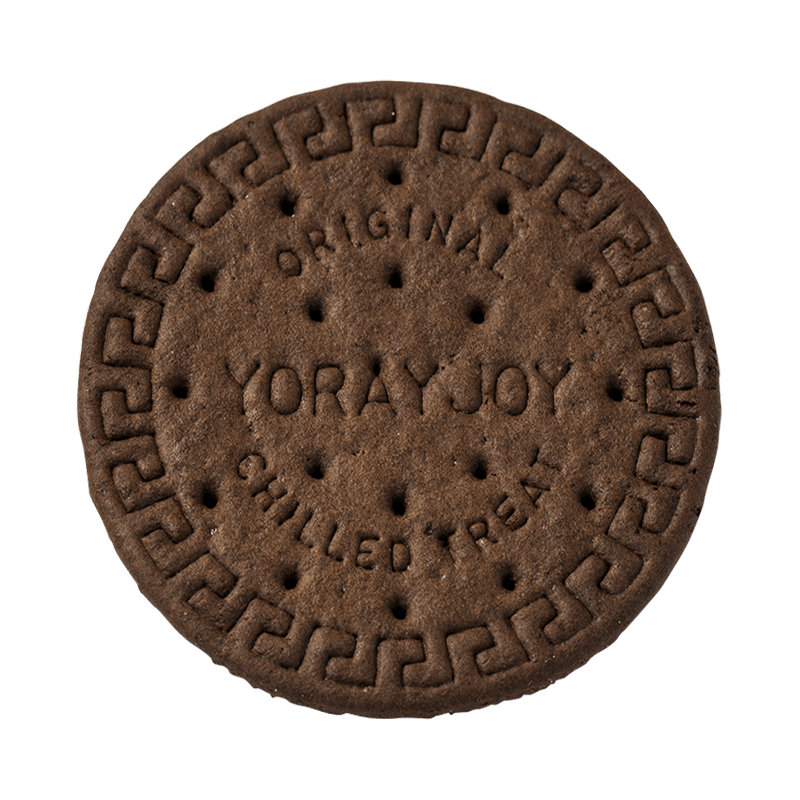
These Round Cocoa Hard Biscuits are specially designed for high-end frozen desserts and creative snacks, combining a crisp texture with excellent cold-chain transformation properties.
See Details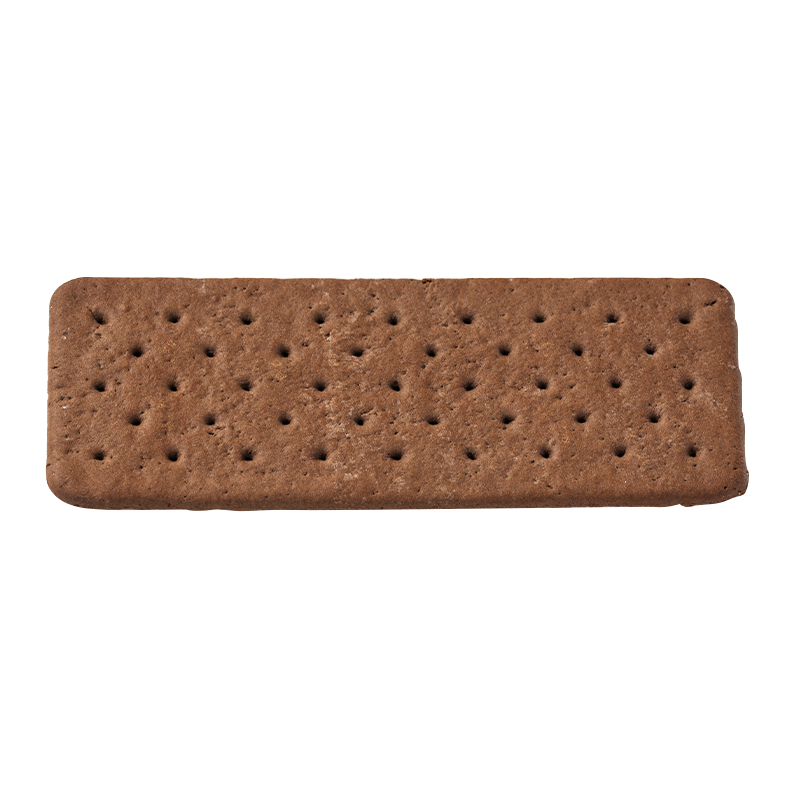
This rectangular cocoa hard biscuit is a classic baked semi-finished product, combining a crisp texture with excellent physical compatibility, making it an ideal base for frozen desserts and creative snacks.
See Details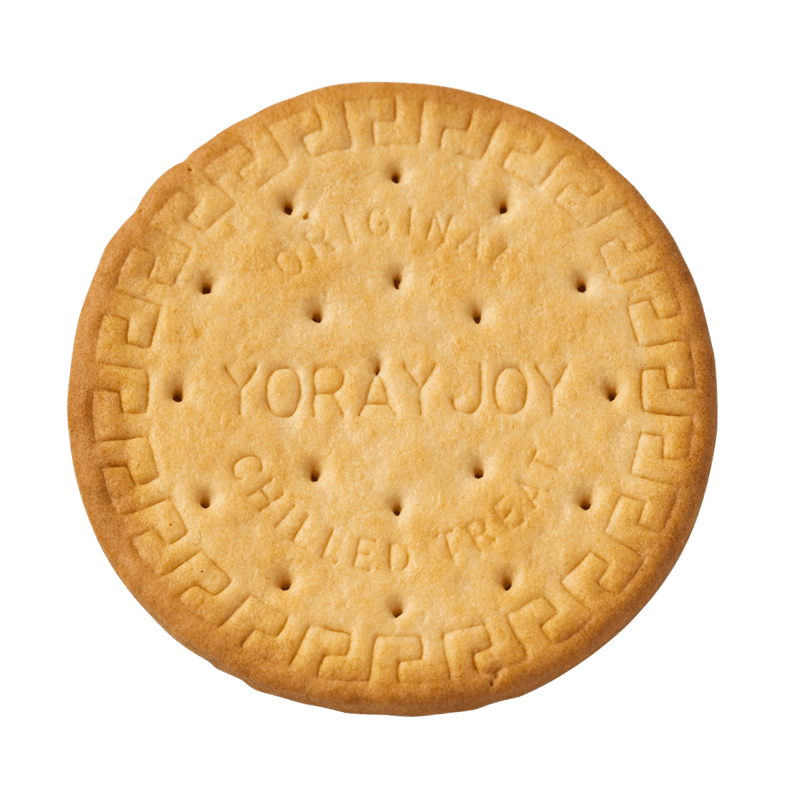
These Round Butter Hard Biscuits combine classic flavor with versatile textures, making them the ideal base for ice cream sandwiches.
See Details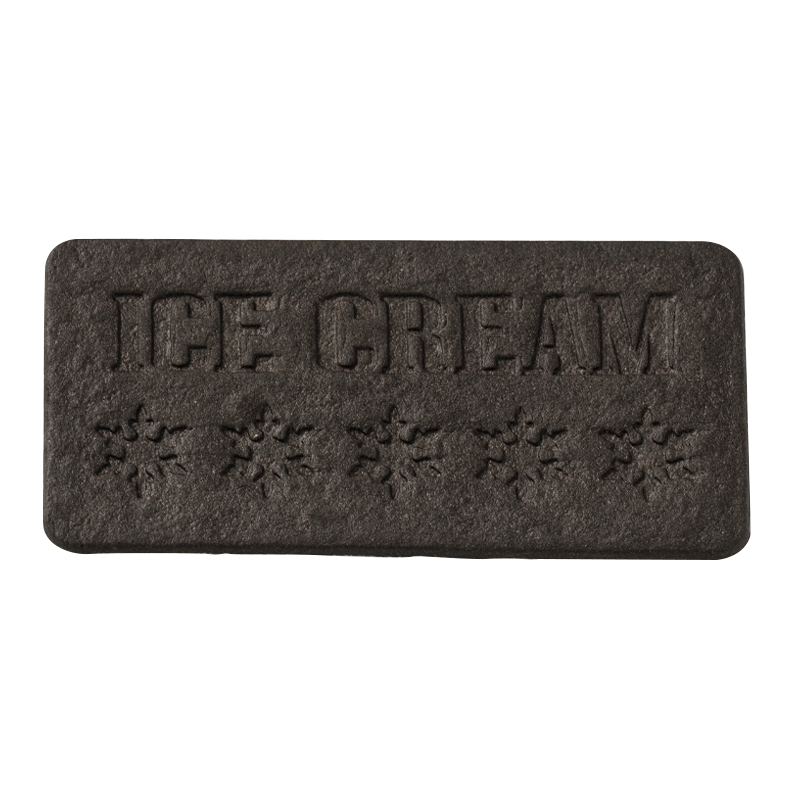
This rectangular cocoa crisp biscuit is the ideal shell for ice cream sandwiches. It continues the classic "Oreo" flavor profile and is optimized for cold chain environments.
See Details
This core component, specifically designed for premium ice cream, features a scientifically formulated high-fat and high-sugar ratio, providing both robust structural support and a melt-in-your-mouth crispness.
See Details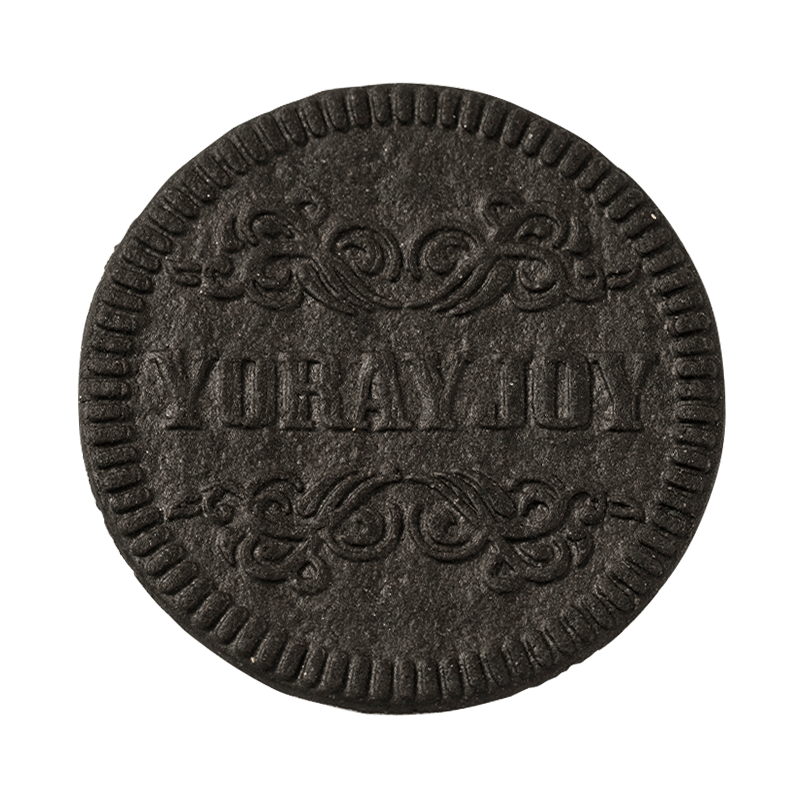
This product is a professional base ingredient specifically designed for high-end frozen desserts. It uses a high oil-to-sugar ratio and select low-gluten flour to create an exceptionally crisp texture that crumbles in y...
See Details
Quick Links
Product Category
Code Preview
